MITSUBISHI PAC-YT51CRA Electric Controller
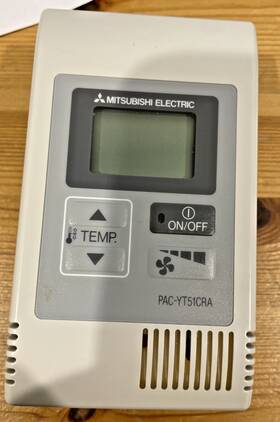
( Brand: Mitsubishi ), ( Manufacturer Part Number: PAC-YT51CRA ), ( Model: MITSUBISHI ELECTRIC PAC-YT51CRA ), ( Part Type: Controller )
Review MITSUBISHI Electric Controller Used
The **Mitsubishi PAC-YT51CRA** is a high-performance, programmable automation controller designed to deliver precision, reliability, and flexibility for industrial and commercial applications requiring advanced control and automation. Part of Mitsubishi Electric s robust PAC (Programmable Automation Controller) series, this compact yet powerful unit combines cutting-edge processing capabilities with seamless integration into modern manufacturing, HVAC, building automation, and process control systems. Engineered with a **32-bit CPU architecture**, the PAC-YT51CRA ensures rapid execution of control logic, real-time data processing, and efficient handling of complex tasks, making it ideal for applications demanding high-speed response and deterministic operation. Its **modular design** allows for easy expansion through a variety of I/O modules, including digital inputs/outputs, analog signals, communication ports, and specialized interfaces, enabling users to tailor the system to their specific operational needs without compromising performance.
One of the standout features of the PAC-YT51CRA is its **enhanced communication capabilities**, which include built-in support for **Ethernet/IP, Modbus TCP, Profibus DP, and CC-Link**, among other industry-standard protocols. This ensures seamless interoperability with PLCs, SCADA systems, HMIs, and other automation devices, facilitating centralized monitoring, data logging, and remote diagnostics. The controller also incorporates **Mitsubishi s proprietary GX Works3 software**, a user-friendly development environment that simplifies programming, debugging, and troubleshooting through intuitive drag-and-drop functionality, ladder logic, and structured text options. This software platform further extends the PAC-YT51CRA s versatility by supporting advanced features such as **motion control, safety functions, and predictive maintenance tools**, allowing engineers to optimize efficiency and reduce downtime in demanding environments.
Built with **industrial-grade durability**, the PAC-YT51CRA is housed in a **compact, DIN-rail mountable enclosure** that meets strict IP65 and IP67 ratings, ensuring protection against dust, moisture, and harsh operating conditions. Its **wide operating temperature range** of -10 C to 55 C (14 F to 131 F) and robust power supply options (100 240V AC or 24V DC) make it suitable for deployment in factories, warehouses, and outdoor installations where environmental resilience is critical. Additionally, the controller s **low power consumption** and energy-efficient design contribute to cost savings while maintaining high performance, aligning with modern sustainability goals. Whether deployed in a **packaging line, conveyor system, or building automation setup**, the PAC-YT51CRA delivers a balance of **speed, scalability, and reliability**, making it a cornerstone for next-generation automation solutions.
The Mitsubishi PAC-YT51CRA is an industrial programmable automation controller (PAC) designed for automation and control applications. Below is a detailed breakdown of its pros and cons, followed by a conclusion and recommendation.
---
**Pros:**1. **High Performance and Reliability**: The PAC-YT51CRA is built on Mitsubishi Electric s robust industrial automation platform, known for durability and reliability in harsh environments. It supports high-speed processing and real-time control, making it suitable for demanding applications like manufacturing, process control, and robotics.
2. **Scalability and Flexibility**: The controller is part of the PAC series, which offers modularity and scalability. Users can expand functionality by adding I/O modules, communication interfaces, or additional processing units as their automation needs grow. This modularity allows for customization to fit specific applications without replacing the entire system.
3. **Advanced Programming Capabilities**: The PAC-YT51CRA supports multiple programming languages, including Structured Text (ST), Ladder Logic (LD), Function Block Diagram (FBD), and Sequential Function Chart (SFC). This versatility makes it accessible to engineers with different backgrounds and allows for complex control logic implementation. Additionally, it integrates with Mitsubishi s GX Works software, which provides a comprehensive development environment.
4. **High-Speed Processing and Real-Time Control**: The controller features high-speed processing capabilities, including a 32-bit CPU with fast execution times. This is critical for applications requiring precise timing, such as motion control, synchronization, or high-speed data acquisition. The real-time operating system ensures deterministic performance, which is essential for safety-critical applications.
5. **Rich Communication Interfaces**: The PAC-YT51CRA supports a wide range of communication protocols, including Ethernet/IP, Profibus DP, CC-Link, Modbus, and others. This interoperability allows seamless integration with other PLCs, HMIs, SCADA systems, and enterprise networks. The Ethernet ports enable easy connectivity for remote monitoring and control, which is valuable for Industry 4.0 applications.
6. **Built-in Safety Functions**: Mitsubishi s PAC series often includes safety features such as safety-rated outputs, emergency stop inputs, and integration with safety relays. The PAC-YT51CRA can be configured to meet safety standards like ISO 13849 or IEC 62061, reducing the need for additional safety controllers and simplifying compliance.
7. **Support for Motion Control**: The controller supports advanced motion control functions, including servo and stepper motor control, interpolation, and synchronization. This makes it suitable for applications requiring precise motion profiles, such as CNC machines, packaging equipment, or robotic arms.
8. **Long-Term Availability and Support**: Mitsubishi Electric is a well-established manufacturer with a strong global support network. The PAC-YT51CRA is part of a proven product line, ensuring long-term availability of spare parts, firmware updates, and technical support. This reduces the risk of obsolescence and ensures continuity in automation projects.
9. **Energy Efficiency**: As an electric controller, the PAC-YT51CRA does not rely on traditional mechanical or pneumatic components, which can reduce energy consumption in certain applications. Additionally, its efficient processing minimizes power draw compared to some legacy systems.
10. **Integration with Mitsubishi s Ecosystem**: The controller integrates seamlessly with other Mitsubishi products, such as Q-series PLCs, FR-F series inverters, and GT series HMIs. This ecosystem simplifies system design, reduces integration complexity, and leverages shared resources for training and support.
---
**Cons:**1. **High Initial Cost**: The PAC-YT51CRA is a high-end controller, and its advanced features come with a higher upfront cost compared to basic PLCs or simpler automation controllers. This can be a barrier for small businesses or startups with limited budgets. The cost also extends to additional modules, programming software, and training.
2. **Complexity for Beginners**: The advanced features and programming capabilities of the PAC-YT51CRA can be overwhelming for users without prior experience in industrial automation. The learning curve for mastering Structured Text, motion control, or safety functions may require significant training or external expertise, adding to the overall cost.
3. **Software Dependency**: The controller relies heavily on Mitsubishi s GX Works software for programming, debugging, and monitoring. This creates a dependency on the software, which may require licensing fees, updates, or technical support. Compatibility issues with newer versions of the software could also arise over time.
4. **Limited Open Standards Support**: While the PAC-YT51CRA supports several communication protocols, some may be proprietary or less common in open-standard environments. This could limit interoperability with third-party devices or systems that rely on non-Mitsubishi protocols. Users may need to invest in additional gateways or converters to achieve full compatibility.
5. **Maintenance and Training Costs**: Due to its complexity, maintaining and troubleshooting the PAC-YT51CRA may require specialized knowledge. Companies may need to invest in training for their staff or hire external consultants, which adds to the operational costs. Additionally, firmware updates or patches may require downtime for testing and implementation.
6. **Physical Size and Space Requirements**: The PAC-YT51CRA is a larger and more robust unit compared to compact PLCs. This may require additional space in control panels or enclosures, which could be a constraint in applications with limited installation space. The physical size also contributes to higher shipping and handling costs.
7. **Potential for Overkill**: For simple automation tasks that do not require high-speed processing, advanced motion control, or extensive I/O expansion, the PAC-YT51CRA may be overkill. In such cases, a simpler and less expensive PLC could suffice, reducing unnecessary complexity and cost.
8. **Vendor Lock-In**: Mitsubishi s proprietary features and software can create vendor lock-in, making it difficult to migrate to other automation platforms in the future. Switching to a different manufacturer may require rewriting programs, retraining staff, or investing in new hardware, which can be costly and disruptive.
9. **Limited Availability of Third-Party Tools**: Compared to more open platforms, the PAC-YT51CRA has fewer third-party tools, libraries, or extensions available for custom development. This can limit innovation and flexibility in certain applications where off-the-shelf solutions are not sufficient.
10. **Firmware and Hardware Updates**: While Mitsubishi provides updates to improve performance and security, these updates may occasionally introduce bugs or compatibility issues. Testing updates in a production environment can be risky and may require careful planning to avoid downtime or operational disruptions.
---
**Conclusion:**The Mitsubishi PAC-YT51CRA is a powerful and versatile programmable automation controller well-suited for complex, high-performance industrial applications. Its advanced features, such as high-speed processing, motion control, safety functions, and extensive communication capabilities, make it an excellent choice for manufacturers, process control systems, and automation projects requiring precision and reliability. The controller s scalability, integration with Mitsubishi s ecosystem, and long-term support further enhance its value for enterprises with demanding automation needs.
However, the PAC-YT51CRA is not without drawbacks. Its high initial cost, complexity for beginners, and dependency on proprietary software and training can be significant challenges, particularly for smaller businesses or applications with simpler requirements. The potential for vendor lock-in, limited third-party tool support, and the need for careful maintenance also warrant consideration. Additionally, for users who prioritize open standards or cost efficiency, the PAC-YT51CRA may not be the most practical choice.
Ultimately, the decision to purchase the PAC-YT51CRA depends on the specific requirements of the automation project. If the application demands high performance, advanced control, and integration with Mitsubishi s products, the PAC-YT51CRA is a robust and reliable investment. For simpler or budget-conscious applications, a more basic PLC or a different PAC model may be more appropriate.
---
**Recommendation:** Purchase the Mitsubishi PAC-YT51CRA if:- Your application requires high-speed processing, advanced motion control, or complex safety functions.
- You are already using or plan to integrate with Mitsubishi s ecosystem of PLCs, HMIs, or inverters.
- Your team has the expertise or is willing to invest in training to fully utilize the controller s capabilities.
- Long-term reliability, scalability, and vendor support are critical to your automation strategy.
- The budget can accommodate the higher upfront cost and potential maintenance expenses.
Consider alternatives, such as a simpler PLC or a different PAC model (e.g., Mitsubishi s Q-series or another brand s PAC), if:- Your application is relatively straightforward and does not require the PAC-YT51CRA s advanced features.
- Cost efficiency is a priority, and the initial investment or operational complexity is a concern.
- You prefer open standards or third-party tool support over proprietary solutions.
- Your team lacks the expertise to program or maintain the controller effectively.
Before making a final decision, evaluate your project s requirements, budget, and long-term goals. Consult with Mitsubishi s technical support or a certified automation integrator to ensure the PAC-YT51CRA aligns with your needs and to explore any available discounts, financing options, or bundled packages.
Details:
Was working when HVAC unit died. No box or instructions.
part #: pacyt51cra prices
- $59.95-$90.00
specifications hvaapa:
- brand: Mitsubishi
- mpn: Pac-yt51cra
- model: Mitsubishi Electric Pac-yt51cra
- part type: Controller
offer hvaapa:
- availability: In Stock
- options: Ship-to-home
- started: May 19, 2026
- quantity: 1
- sold: 0
returns hvaapa:
- policy: No Returns
payments hvaapa:
- wallet: Paypal
- credit card: Discover
- other
seller hvaapa:
- city: Charlotte, North Carolina
- rating: 100.0%
- # reviews: 673
shipping hvaapa:
- transit: 3-8 Days
- cost: $11.35
- service: USPS Ground Advantage
- carrier: USPS
- class: Standard
- type: Calculated
general hvaapa:
- HVAC Refrigeration > HVAC Refrigeration: Parts Accessories > HVAC Refrigeration: Controls Circuit Boards
- condition: Used
Mitsubishi PAC-YT51CRA Is Similar To:
- 71b46610177340 Mitsubishi New Remote Controller (50% similar) Please message me with any questions grouping: same group use only other PAC-YT53CRAU simple ma controllers, PAR-33MAA deluxe ma remote controllers, and par-fl A32MA wireless ma controllers up to two per. 5 x 120MM room temperature can be sensed either at the indoor unit default orate remote ...(October 22nd, 2018)
- 74s60905 Rg76n615g01 Mitsubishi Mitshubishi Controller (44.7% similar) 30 day warranty. This item: Mitsubishi controller g4 ks. Don't see the one you are looking for. Free priority shipping...(January 26th, 2018)
- E12d68307 Mitsubishi Electric Hvac Room Thermistor (50.5% similar) Happy buying. Free shipping...(March 16th, 2019)
- E12g74451 Mitsubishi Electric Nib Inverter (52.7% similar) Been selling Mitsubishi mini splits accessories for years and always try to help...(March 18th, 2017)
- E12g77451 Mitsubishi Electric Nib Inverter (52.7% similar) Been selling Mitsubishi mini splits accessories for years and always try to help...(March 16th, 2017)
- E12g78451 Mitsubishi Electric Nib Inverter (52.7% similar) Been selling Mitsubishi mini splits accessories for years and always try to help...(March 16th, 2017)
- E12j43451 Mitsubishi Electric Nib Inverter (52.7% similar) Been selling Mitsubishi mini splits accessories for years and always try to help...(March 17th, 2017)
- E12j68451 Mitsubishi Electric Nib Inverter (52.7% similar) Been selling Mitsubishi mini splits accessories for years and always try to help...(March 18th, 2017)
- E17325300 Mitsubishi Electric New Indoor Fan Motor Assembly (48.1% similar) New still sealed in box Mitsubishi electric indoor fan motor E17...(August 30th, 2018)
- Mac-333if-e Mitsubishi New Nib Sealed Electric System Control Interface (53.3% similar) Still sealed. Please see pictures as they are part of the. Mitsubishi electric MAC-333IF-E - system control interface...(July 19th, 2018)
