AMERICAN LM3113-2-FD3707-2-SD1492-2 Induction Heating Board Controller Pcb V-182
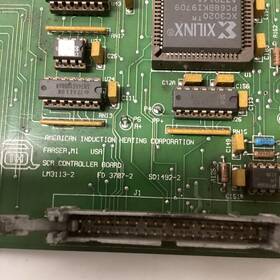
( Brand: American ), ( Manufacturer Part Number: LM3113-2-FD3707-2-SD1492-2 ), ( Part Type: Controller Board )
Review AMERICAN Induction Heating Controller Board Pcb V-182
The **American LM3113-2-FD3707-2-SD1492-2 Induction Heating Controller PCB (Version V-182)** is a high-performance, precision-engineered circuit board designed specifically for advanced induction heating applications, offering unparalleled control, efficiency, and reliability in industrial, laboratory, and specialized manufacturing environments. Built upon a robust, high-density PCB layout, this controller board integrates a sophisticated combination of analog and digital signal processing components, including the industry-leading **LM3113-2** integrated circuit a dual-channel, high-speed comparator with precision voltage and current monitoring capabilities paired with **FD3707-2** MOSFET drivers optimized for high-frequency switching and minimal thermal drift. The inclusion of **SD1492-2** components further enhances its performance by providing stable, low-noise power regulation and adaptive feedback mechanisms, ensuring consistent and repeatable heating profiles even under varying load conditions.
At its core, this induction heating controller board is engineered to deliver **sub-millisecond response times**, making it ideal for applications requiring rapid thermal cycling, such as metal hardening, annealing, soldering, and material treatment processes. The dual-channel architecture allows for independent control of two separate heating zones or the simultaneous operation of two induction coils, enabling complex heating patterns and multi-stage thermal processing with seamless synchronization. The PCB s **high-frequency switching capability** (up to several hundred kilohertz) minimizes energy loss and reduces electromagnetic interference (EMI), while its **wide input voltage range** (adjustable for compatibility with various power supplies) ensures flexibility in deployment across different industrial setups. Additionally, the board incorporates **overcurrent, overtemperature, and short-circuit protection** circuits, safeguarding both the equipment and the operator from potential hazards while maintaining operational integrity.
For users seeking **customizable and scalable solutions**, this controller board features **adjustable duty cycle modulation**, **PWM (Pulse Width Modulation) control**, and **programmable gain settings**, allowing engineers to fine-tune the heating output to match specific material properties, coil configurations, and process requirements. The **low-power consumption design** of the LM3113-2 and supporting components ensures efficient operation without compromising performance, while the **surface-mount technology (SMT)** assembly enhances reliability and reduces the risk of solder joint failures in demanding environments. Furthermore, the board s **modular and expandable architecture** accommodates additional sensors, feedback loops, or auxiliary control modules, making it a versatile platform for both standalone applications and integration into larger automation systems.
Suitable for **OEM manufacturers, research laboratories, and precision machining facilities**, the **LM3113-2-FD3707-2-SD1492-2 Induction Heating Controller PCB (V-182)** represents a cutting-edge solution for those demanding **high precision, repeatability, and durability** in induction heating processes. Whether used in **metalworking, electronics assembly, or materials science**, this controller board delivers the **speed, accuracy, and protection** necessary to optimize thermal treatments while minimizing operational downtime. With its **comprehensive protection features, high-frequency efficiency, and adaptable control algorithms**, it stands as a premium choice for professionals who require a **next-generation induction heating solution** built to exacting standards.
The **LM3113-2-FD3707-2-SD1492-2 induction heating controller PCB (V-182)** is a specialized board designed for controlling induction heating systems, often used in applications like soldering, melting, forging, or heat treatment. Below is a detailed breakdown of its pros and cons, followed by a conclusion and recommendation.
---
### **Pros**
1. **High Precision and Control**
The LM3113 series is known for its advanced digital control capabilities, allowing for precise temperature regulation, power output adjustment, and response to load changes. This ensures consistent heating performance, which is critical in applications requiring uniformity (e.g., soldering small components or melting metals).
2. **Fast Response Time**
Induction heating requires rapid adjustments to maintain stability. This PCB likely incorporates high-speed switching elements (e.g., MOSFETs or IGBTs) and feedback loops, enabling quick corrections to temperature or power fluctuations. This is beneficial for dynamic processes where delays could cause overheating or underheating.
3. **Compatibility with Various Loads**
The board is designed to handle a range of inductive loads, from small coils for soldering to larger coils for melting or forging. Its adjustable parameters (e.g., frequency, duty cycle, and power) make it versatile for different applications. The "V-182" revision may include optimizations for specific load types or efficiency improvements.
4. **Digital Interface and Programmability**
Many LM3113-based controllers feature digital communication interfaces (e.g., RS-232, USB, or CAN bus) and programmable settings via software. This allows users to fine-tune parameters remotely, log data, or integrate the system into larger automation workflows. Some versions may support PID tuning for even finer control.
5. **Energy Efficiency**
Induction heating is inherently efficient because it directly heats conductive materials without wasting energy on the surrounding environment. The LM3113 s optimized switching and feedback mechanisms likely further reduce energy loss compared to resistive heating methods.
6. **Compact and Modular Design**
The PCB is likely designed to be compact, making it suitable for integration into smaller systems or custom setups. The modular nature of the board (e.g., separate power stage and control logic) allows for easier upgrades or repairs.
7. **Safety Features**
Induction heating can generate high voltages and currents, so safety is paramount. This PCB may include protections such as:- Overcurrent/overvoltage protection to prevent damage to the coil or power supply.
- Short-circuit detection to shut down the system if a fault occurs.
- Isolation between high-voltage and control circuits to reduce electrical hazards.
- Thermal protection to prevent overheating of the PCB or components.
8. **Support for Advanced Features**
Some versions of the LM3113 series support features like:- Ramp-up/ramp-down control for gradual heating/cooling.
- Multiple heating profiles or sequences for complex processes.
- Integration with sensors (e.g., thermocouples or RTDs) for direct temperature feedback.
- Fault diagnostics and error logging for troubleshooting.
9. **Cost-Effective for High-Volume Applications**
While the initial cost of the PCB may be moderate, its efficiency and precision can reduce material waste and downtime in industrial or high-volume applications. This makes it a cost-effective choice over time, especially when compared to manual or less precise heating methods.
10. **Community and Documentation Support**
The LM3113 series has a dedicated user community (e.g., forums, YouTube tutorials, or GitHub repositories) where users share modifications, troubleshooting tips, and custom firmware. This can be invaluable for DIY enthusiasts or small-scale users who need to adapt the board to their specific needs.
---
### **Cons**
1. **Complexity for Beginners**
Induction heating controllers, even those based on the LM3113, require a basic understanding of electronics, power supplies, and feedback control systems. Beginners may struggle with:
- Configuring parameters like frequency, duty cycle, or PID settings.
- Safely handling high-voltage components (e.g., flyback diodes, capacitors, or transformers).
- Troubleshooting issues like arcing, overheating, or unstable power output.
A lack of experience could lead to damaged equipment or unsafe conditions.
2. **Requires Additional Components**
The PCB alone is not a complete system. Users must provide:- A suitable power supply (e.g., a high-frequency inverter or DC-DC converter) capable of delivering the required voltage/current.
- An induction coil tailored to the application (e.g., size, turns, and material for the desired frequency).
- Cooling solutions (e.g., fans or heatsinks) for the PCB and power stage, especially in high-power applications.
- Sensors (e.g., thermocouples) if the board lacks built-in temperature measurement.
These additional components can increase the total cost and complexity of the setup.
3. **Limited Documentation for Specific Revision**
The "V-182" revision may not have widely available or detailed documentation compared to more common versions (e.g., V-1.0 or V-1.5). This could make it harder to:
- Understand the exact specifications or limitations of the board.
- Find compatible parts or replacement components.
- Access community support if issues arise.
Always verify that the documentation or schematics for V-182 are available before purchasing.
4. **Potential for Overheating**
Induction heating generates significant heat, and the PCB may overheat if:- The cooling system is inadequate (e.g., insufficient airflow or heatsinks).
- The power supply or coil is mismatched, causing excessive current draw.
- The board is operated continuously without breaks.
Overheating can reduce the lifespan of components like MOSFETs or capacitors and may require additional passive cooling (e.g., heat sinks, thermal paste).
5. **Safety Risks if Mismanaged**
Induction heating involves high-frequency currents and magnetic fields, which can pose risks if not handled properly:- **Electrical hazards**: Improper wiring or lack of insulation can cause electric shocks or short circuits.
- **Fire risk**: Arcing or overheating of the coil or PCB can ignite nearby flammable materials.
- **Interference**: High-frequency signals may interfere with nearby electronics or communication devices.
Users must follow safety protocols, such as grounding the system, using proper insulation, and working in a controlled environment.
6. **Dependence on External Power Supply**
The performance of the induction heating system is directly tied to the quality and stability of the power supply. Issues such as:- Voltage fluctuations or noise from the power source.
- Insufficient current capacity for the load.
- Poorly regulated DC input (if using a DC-DC converter).
Can degrade the performance of the LM3113 board. A dedicated, high-quality power supply is often necessary.
7. **Learning Curve for Customization**
While the LM3113 is programmable, customizing it (e.g., modifying firmware, adjusting control algorithms, or adding new features) requires knowledge of embedded systems or microcontroller programming (e.g., using Arduino, STM32, or custom firmware). Beginners may find this daunting and may need to rely on pre-configured settings.
8. **Potential for Compatibility Issues**
If the PCB is part of a larger system (e.g., integrated with a specific power supply or software), compatibility issues may arise. For example:- The power supply may not provide the correct voltage or current range.
- The software interface may not support the V-182 revision s features.
- Mechanical constraints (e.g., mounting holes or PCB size) may not align with the user s setup.
Always test compatibility before committing to a purchase.
9. **Limited Lifespan of High-Voltage Components**
Components like MOSFETs, diodes, and capacitors in the power stage are subject to wear and tear, especially under high-stress conditions (e.g., frequent cycling, high temperatures, or overcurrent). While the LM3113 board itself may last long, the associated high-voltage components may need replacement after extended use, adding to maintenance costs.
10. **Regulatory and Certification Challenges**
If the induction heating system is intended for commercial or industrial use, it may need to comply with safety standards (e.g., UL, CE, or ISO). Retrofitting a DIY PCB with a custom power supply may not meet these standards, requiring additional certification testing. This can be time-consuming and costly for small-scale users.
---
### **Conclusion**
The **LM3113-2-FD3707-2-SD1492-2 induction heating controller PCB (V-182)** is a powerful and versatile tool for applications requiring precise, efficient, and programmable induction heating. Its strengths lie in its high precision, fast response, digital control capabilities, and compatibility with a wide range of loads. These features make it ideal for hobbyists, small-scale manufacturers, and professionals working on projects like soldering, melting, forging, or heat treatment.
However, the board s complexity, the need for additional components, and the potential safety risks pose challenges, particularly for users without prior experience in electronics or power systems. The lack of widely available documentation for the V-182 revision and the dependence on external power supplies and cooling systems further add layers of complexity.
For users who are willing to invest time in learning and setting up the system safely, the LM3113 board offers excellent performance and
Details:
The American Induction Heating LM3113-2-FD3707-2-SD1492-2 Controller Board PCB is a specialized control board designed for HVAC and refrigeration systems. This board, manufactured by American, is specifically designed for induction heating applications, providing precise control and efficiency. With its model number LM3113-2-FD3707-2-SD1492-2, this controller board is a reliable and essential component for maintaining repairing HVAC refrigeration systems in variety of industrial commercial settings.
part #: lm3113-2-fd3707-2-sd1492-2 prices
- $299.99-$349.99
specifications hvaapa:
- brand: American
- mpn: Lm3113-2-fd3707-2-sd1492-2
- part type: Controller Board
seller hvaapa:
- # reviews: 1659
- city: Erie, Pennsylvania
- rating: 99.9%
returns hvaapa:
- policy: Returns Accepted
- method: Money back
- time: 30 Days
- paid by: Seller
offer hvaapa:
- availability: In Stock
- best offers: True
- options: Ship-to-home
- quantity: 1
- started: March 10, 2026
- sold: 0
general hvaapa:
- condition: Used
- HVAC Refrigeration > HVAC Refrigeration: Parts Accessories > HVAC Refrigeration: Controls Circuit Boards
payments hvaapa:
- credit card: Discover
- other
- wallet: Google-pay
shipping hvaapa:
- cost: $0.00
- type: Fixed
- transit: 3-7 Days
- class: Standard
- service: USPS Ground Advantage
- carrier: USPS
American LM3113-2-FD3707-2-SD1492-2 Is Similar To:
- 21c140501g19 American Standard Control Board (41.9% similar) Free priority shipping. Don't see the one you are looking for. 30 day warranty...(January 25th, 2018)
- 21c140501g38 American Standard Trane Control Board Ks (42.1% similar) 30 day warranty. Free priority shipping. Don't see the one you are looking for...(June 13th, 2018)
- 21c140501g44 American Standard Control Board Recip Ap (43.6% similar) Selling a used but working hvac circuit board...(March 20th, 2018)
- Cnt01866 Cnt 1866 Trane American Standard New Furnace Control Circuit Board (36.1% similar) A special order part that did not fix the problem. Partial list of Trane,American standard units that use this item: DCY060F1M0AF DCY060F3M0AF DCY060F4M0AF GSHC018A GSHC018B GSHC018C GSHC024A GSHC024B GSHC024C GSHC030A GSHC030B GSHC030C GSHC036A GSHC036B GSHC036C GSHC042A GSHC042B GSHC042C GSHC048A ...(October 18th, 2018)
- Trane X13650874010 03457 American Standard Furnace Control Board Cnt Used p910 (37.7% similar) Item is used but tested and in good condition. The board is compatible with various brands and types of furnaces, including those used for industrial commercial purposes. It has been previously owned but is in good working condition and thoroughly tested. This Trane American standard furnace control...(October 10th, 2023)
- Trane American Standard 21c150624g01 Control Board 62401 7699 B2 Cp (39.5% similar) Trane American standard control board 21C150624G01 62401 7699 b2 CAP. Shipped with USPS ground advantage. Condition is used...(October 31st, 2023)
- American Standard 21c140501g52 Cnt05008 Recip Control Board (38.8% similar) In good used condition...(December 16th, 2023)
- American Standard 21c140501g10 Defrost Control Board Cnt1509 (41.4% similar) Part #: American standard 21C140501G10 for sale...(December 16th, 2023)
- Trane 21c140501g54 Oem American Standard Defrost Control Board (38% similar) Trane unit control board. I bought this with the intent of fixing my old unit but ended up moving homes...(December 29th, 2023)
- Emerson B342140p02 American Standard Trane Main Circuit Board (32.6% similar) Ended up having to replace the furnace this year. This board is hard to find. New board installed on American standard Trane furnace winter of 2022 . Board comes on mounting plate with transformer...(August 1st, 2024)
