GR SSLIN DT140 Grasslin Electromechanical Defrost Timer ST-240 Manage Cooling
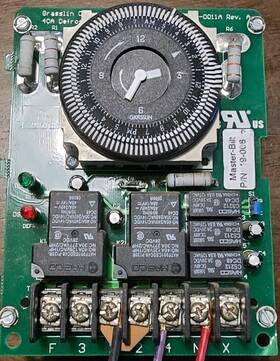
( Brand: Gr Sslin ), ( Manufacturer Part Number: DT140 ), ( Item Thickness: 1 In ), ( Type: Defrost Control Board ), ( Power Source: Corded Electric ), ( Voltage: 240 V ), ( Material: Plastic ), ( Power Phase: 1 Phase )
Review GR SSLIN Grasslin Electromechanical Defrost Timer Manage Cooling And Cycles
The **Grasslin DT140 ST-240 Electromechanical Defrost Timer** is a robust and precision-engineered time control unit designed specifically for commercial refrigeration and freezer systems, ensuring optimal performance and energy efficiency in demanding environments. Built with Grasslin s signature reliability and durability, this timer is crafted to manage defrost cycles with unmatched accuracy, making it an indispensable component for maintaining the integrity of evaporator coils and preserving the longevity of refrigeration equipment. The DT140 ST-240 operates on a proven electromechanical mechanism, combining mechanical precision with electrical reliability to deliver consistent defrost timing without the need for complex programming or digital interfaces. Its robust stainless steel construction resists corrosion, moisture, and mechanical stress, ensuring dependable operation even in harsh industrial settings where temperature fluctuations and humidity levels can be extreme.
This timer features a **140-minute defrost cycle range**, allowing for flexible configuration to match the specific defrost requirements of various refrigeration applications, from medium-duty coolers to high-capacity freezers. The **ST-240 model** incorporates a **240-minute on/off cycle**, providing ample time for defrost operations while minimizing energy consumption during active cooling phases. The timer s intuitive dials and switches enable easy manual adjustment, allowing technicians to fine-tune defrost intervals, delay periods, and cycle durations without requiring specialized tools or technical expertise. This simplicity, combined with its mechanical durability, makes the DT140 ST-240 an ideal choice for both new installations and retrofits in commercial kitchens, grocery stores, and industrial cold storage facilities.
One of the standout features of the Grasslin DT140 ST-240 is its **fail-safe design**, which prioritizes equipment protection by ensuring defrost cycles proceed even if power interruptions occur. This redundancy helps prevent ice buildup and potential system failures, thereby reducing downtime and maintenance costs. The timer s compact yet sturdy housing is designed for easy mounting on control panels or within equipment enclosures, with clear labeling and accessible terminals for straightforward wiring connections. Whether integrated into a reach-in cooler, a walk-in freezer, or a large-scale refrigeration system, this timer delivers consistent performance while adhering to strict industry standards for safety and efficiency.
For facilities where reliability is non-negotiable, the Grasslin DT140 ST-240 Electromechanical Defrost Timer represents a time-tested solution that bridges the gap between mechanical simplicity and high-performance cooling management. Its combination of precision timing, corrosion-resistant materials, and user-friendly controls ensures that refrigeration systems operate at peak efficiency, reducing energy waste and extending the lifespan of critical components. By choosing this timer, operators can trust in a product that has been engineered to withstand the rigors of commercial refrigeration while maintaining the delicate balance between defrost effectiveness and energy conservation.
### Pros and Cons of buying a Grasslin DT140 ST-240 Electromechanical Defrost Timer
#### **Pros**
1. **Reliability and Durability** Grasslin timers are known for their robust construction and long lifespan, particularly in industrial and commercial refrigeration applications. The electromechanical design is less prone to electronic failures compared to digital or programmable models, making it a dependable choice for continuous operation.
2. **Simplicity and Low Maintenance** The mechanical nature of the timer means fewer components that can fail or require calibration. There are no screens, buttons, or software to malfunction, reducing downtime and repair costs. Replacement parts are often readily available due to its widespread use.
3. **Cost-Effective for Basic Needs** This timer is designed for straightforward defrost cycles, making it a budget-friendly option for applications where advanced features (like programmable defrost intervals or remote control) are unnecessary. It is ideal for small to medium-sized refrigeration units where simplicity is prioritized over complexity.
4. **Compatibility with Older Systems** If you re working with legacy refrigeration equipment, this timer is likely to be compatible without requiring extensive modifications. Many commercial refrigerators and freezers from the mid-20th century to the early 21st century were designed to use Grasslin or similar electromechanical timers.
5. **No Power Supply Issues** Unlike digital timers that rely on batteries or electrical power, this mechanical timer operates independently of external power sources (other than the main circuit), reducing the risk of failure due to power fluctuations or outages.
6. **Easy Installation and Replacement** The design is straightforward, and many technicians are familiar with installing Grasslin timers. If a timer fails, it can often be swapped out quickly without extensive troubleshooting.
7. **Consistent Performance** Mechanical timers provide consistent defrost cycles without variability caused by software glitches or user errors. This predictability is valuable in environments where precise temperature control is critical, such as food storage facilities.
---
#### **Cons**
1. **Lack of Programmability** The DT140 ST-240 is a fixed-cycle timer, meaning you cannot adjust the defrost interval or timing dynamically. If your application requires variable defrost cycles (e.g., shorter defrost periods in warmer environments), this timer will not accommodate those needs.
2. **Manual Adjustments for Defrost Duration** While the timer itself is mechanical, the defrost duration may still require manual adjustment (e.g., turning a dial or sliding a switch) to match the specific requirements of your refrigeration unit. This can be inconvenient if frequent adjustments are needed.
3. **Limited Diagnostics** Unlike digital timers, there are no error codes or diagnostic features to help identify issues quickly. If the timer malfunctions, troubleshooting may require disassembly or replacement without clear indicators of what went wrong.
4. **Shorter Defrost Cycles May Not Be Suitable for Heavy Use** If your refrigeration unit experiences heavy condensation or frequent defrosting (e.g., in high-humidity environments or with doors opening frequently), the fixed defrost cycle may not be sufficient. This could lead to ice buildup or inefficient cooling.
5. **Less Energy Efficiency Compared to Advanced Models** Modern programmable timers can optimize defrost cycles based on real-time conditions, reducing energy waste. The fixed-cycle nature of this timer may result in less efficient operation in certain scenarios.
6. **Potential for Wear and Tear Over Time** While mechanical timers are durable, they are not immune to wear. Internal gears, springs, or contacts can degrade over years of use, eventually leading to failure. Replacement may be necessary after prolonged operation.
7. **Limited Customization** If you need features like remote monitoring, Wi-Fi connectivity, or integration with a larger HVAC system, this timer will not support those functionalities. It is a standalone device with no expandability.
8. **Higher Initial Cost for Basic Functionality** While the timer itself may be affordable, if you need to pair it with additional components (e.g., a defrost heater or control board) to make it functional, the total cost could approach that of a more advanced digital timer.
---
### **Conclusion**
The Grasslin DT140 ST-240 electromechanical defrost timer is a solid choice for applications where **simplicity, reliability, and low maintenance** are prioritized over advanced features. It excels in environments where the refrigeration unit has **consistent, predictable defrost needs** and where **cost-effective, long-lasting operation** is desired. However, if your system requires **flexibility in defrost timing, energy efficiency optimizations, or modern diagnostics**, a digital or programmable timer would be a better investment.
This timer is particularly well-suited for:- Small to medium commercial refrigeration units (e.g., walk-in coolers, display cases).
- Legacy systems where compatibility with older components is critical.
- Applications where downtime must be minimized due to its straightforward design.
It may not be ideal for:- Highly variable or energy-intensive environments.
- Systems requiring remote monitoring or automation.
- Users who prefer the convenience of programmable settings.
---
### **Recommendation**
**Buy the Grasslin DT140 ST-240 if:**- You need a **reliable, no-frills timer** for a basic refrigeration setup.
- Your system **does not require adjustable defrost intervals**.
- You operate in an environment where **mechanical simplicity reduces maintenance hassles**.
- You are working with **older equipment** that was designed for Grasslin timers.
**Consider an alternative (e.g., a digital or programmable timer) if:**- You need **customizable defrost cycles** to match changing conditions.
- Your system experiences **heavy condensation or frequent defrosting**.
- You want **energy-saving features** or **remote control capabilities**.
- You are open to investing slightly more for **longer-term efficiency and diagnostics**.
For most modern or high-demand applications, a digital timer (such as those from Grasslin s newer models or competitors like Honeywell or Emerson) may offer better long-term value. However, for its intended purpose, the DT140 ST-240 remains a **proven, dependable option** for those who value mechanical robustness over advanced functionality.
Details:
It features a 24-hour programmable dial and typically operates on 120/240 VAC with 40A switching capacity.The board includes multiple HASCO relays to control high- voltage components like compressors or heaters.
part #: dt140 prices
- $20.79-$35.86
specifications hvaapa:
- brand: Gr Sslin
- mpn: Dt140
- item thickness: 1 In
- type: Defrost Control Board
- power source: Corded Electric
- voltage: 240 V
- material: Plastic
- power phase: 1 Phase
seller hvaapa:
- rating: 100.0%
- city: Dayton, Nevada
- # reviews: 348
shipping hvaapa:
- carrier: USPS
- class: Standard
- service: USPS Ground Advantage
- type: Calculated
- transit: 3-8 Days
- cost: $8.13
returns hvaapa:
- policy: No Returns
offer hvaapa:
- best offers: True
- options: Ship-to-home
- sold: 0
- quantity: 9
- started: June 2, 2026
- availability: In Stock
payments hvaapa:
- credit card: Discover
- wallet: Google-pay
- other
general hvaapa:
- HVAC Refrigeration > HVAC Refrigeration: Parts Accessories > HVAC Refrigeration: Controls Circuit Boards
- condition: Used
Gr Sslin DT140 Is Similar To:
- Gr Sslin Dtav40 Grasslin Defrost Timer Intermatic Used (58.3% similar) This timer is perfect for use in your hvac and refrigeration system, specifically the controls circuit boards department. It is important to note that this item pre-owned, but still in excellent working condition. With its brand name Gr Sslin and model number DTAV40, you can be assured of quality ...(February 11th, 2025)
- Gr Sslin Dtav40m Grasslin Defrost Timer (57.4% similar) Type: defrost timer. Model: DTAV40M. Condition: used. Brand: Grasslin...(September 16th, 2025)
