CARRIER CESR131248-05-04 Air Conditioning Circuit Board CESR131248-05-03
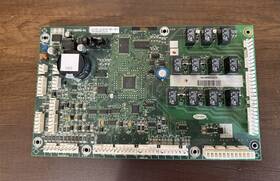
( Brand: Carrier ), ( Manufacturer Part Number: CESR131248-05-04 ), ( Compatible Brand: For Carrier ), ( Type: Chiller Control Board )
Review CARRIER Air Conditioning Circuit Board
The **Carrier CESR131248-05-04 (and its closely related variant, the CESR131248-05-03)** is a high-performance, precision-engineered air conditioning control board designed exclusively for Carrier commercial HVAC systems, specifically tailored for models featuring advanced electronic expansion valve (EEV) and multi-stage refrigeration control capabilities. This circuit board serves as the central nervous system for the system s refrigeration and defrost cycles, ensuring seamless coordination between the compressor, condenser, evaporator, and auxiliary components to maintain optimal temperature regulation, energy efficiency, and operational reliability. Built with robust **surface-mount technology (SMT)** and **through-hole components**, the board integrates a sophisticated **microcontroller-based control system** that monitors and adjusts refrigerant flow, superheat, and subcooling parameters in real time, adapting to varying load conditions with precision. The **CESR131248-05-04** is distinguished by its **dual-channel design**, accommodating both the primary and secondary refrigerant circuits, while the **CESR131248-05-03** may feature slight variations in pinout or firmware calibration, ensuring compatibility with specific Carrier system configurations such as rooftop units (RTUs), packaged terminal air conditioners (PTACs), or VRF (Variable Refrigerant Flow) systems. Constructed with **high-grade FR-4 PCB material** and **conformal coating** for enhanced durability, this board is engineered to withstand the demanding environments of commercial HVAC applications, including exposure to temperature fluctuations, humidity, and electrical noise. Key integrated components include **solid-state relays (SSR)**, **analog-to-digital converters (ADC)**, **PWM (Pulse Width Modulation) drivers**, and **high-precision sensors**, all working in tandem to regulate the **electronic expansion valve (EEV)**, **compressor start/stop sequences**, and **defrost cycles** with minimal latency. The board s **diagnostic capabilities** are equally impressive, featuring built-in **self-test routines** and **fault-code generation**, allowing technicians to quickly identify issues such as **overcurrent conditions, sensor failures, or refrigerant imbalance** without extensive troubleshooting. Whether installed in a **large commercial building s central HVAC system** or a **high-efficiency VRF setup**, this circuit board ensures **consistent performance, extended equipment lifespan, and reduced energy consumption** by optimizing refrigerant management and system efficiency. For technicians and HVAC professionals, the **CESR131248-05-04/05-03** represents a critical component in maintaining the integrity of Carrier s advanced refrigeration technology, offering a balance of **reliability, adaptability, and technical sophistication** in demanding thermal control applications.
### **Pros and Cons of Buying Carrier CSR131248-05-04 and CSR131248-05-03 Air Conditioning Circuit Boards**
#### **Overview**
The **Carrier CSR131248-05-04** and **CSR131248-05-03** are control boards used in Carrier commercial HVAC systems, particularly in rooftop units (RTUs) and packaged air conditioners. These boards manage system functions such as compressor control, fan operation, defrost cycles, and error diagnostics. Below is a detailed analysis of their pros and cons, followed by a conclusion and recommendation.
---
### **Pros of Purchasing These Boards**
1. **Compatibility and Reliability**
- These boards are **OEM (Original Equipment Manufacturer) parts**, meaning they are designed specifically for Carrier systems and should integrate seamlessly without compatibility issues.
- Carrier is a well-established brand with a strong reputation for durability in commercial HVAC applications, reducing the risk of premature failure.
2. **Warranty and Support**
- Purchasing from an **authorized Carrier distributor or dealer** may include a warranty (typically 1 2 years), providing protection against defects.
- Carrier offers technical support and diagnostic tools to help troubleshoot issues, which can be valuable for technicians.
3. **Performance and Efficiency**
- As OEM parts, they maintain the **original performance specifications** of the HVAC system, ensuring efficient operation, proper cooling/heating, and accurate sensor readings.
- Unlike aftermarket or generic replacements, these boards are **calibrated and tested** for the specific model, reducing the risk of system malfunctions.
4. **Long-Term Cost Savings**
- While the upfront cost may be higher than aftermarket alternatives, OEM parts **last longer** and reduce the likelihood of recurring failures that could lead to additional repair costs.
- Prevents **downtime** in commercial settings, where HVAC system failures can disrupt operations and incur lost revenue.
5. **Ease of Installation and Diagnostics**
- Carrier provides **detailed wiring diagrams, schematics, and service manuals** for these boards, simplifying installation and troubleshooting.
- Many newer Carrier models include **self-diagnostic features** that can be accessed via the control board, making repairs more straightforward.
6. **Environmental and Safety Compliance**
- OEM parts adhere to **industry safety standards and environmental regulations**, ensuring compliance with codes like ASHRAE, UL, and local building ordinances.
- Reduces the risk of **voided warranties** or legal issues that could arise from using non-certified components.
---
### **Cons of Purchasing These Boards**
1. **High Upfront Cost**
- OEM Carrier parts are **more expensive** than aftermarket or refurbished alternatives. Prices can range from **$300 to $800 **, depending on availability and region.
- For businesses or contractors on tight budgets, this cost may be a significant barrier, especially if the board is the only failing component.
2. **Potential Lead Times**
- Carrier parts may have **longer lead times** compared to aftermarket options, particularly if the specific model is discontinued or in high demand.
- In urgent repair scenarios (e.g., during peak seasons or equipment failures), delays can cause **extended downtime**.
3. **Limited Availability of Refurbished or Used Units**
- Unlike generic circuit boards, **refurbished Carrier OEM boards are rare** and may not be available from most suppliers. This limits cost-saving options for those unwilling to pay full price.
- Used boards carry a risk of **hidden damage or wear**, which could lead to further failures.
4. **Complexity of Replacement**
- Replacing a control board often requires **disconnecting wiring, resetting system settings, and recalibrating sensors**, which may necessitate professional installation.
- Some Carrier systems use **proprietary connectors or wiring harnesses**, making DIY replacements riskier for untrained technicians.
5. **Risk of Overkill for Minor Issues**
- If the failure is due to a **loose wire, faulty sensor, or tripped relay** (rather than the board itself), replacing the entire control board may be **overkill** and unnecessarily expensive.
- A technician must **diagnose the root cause** before confirming the board is faulty, adding to labor costs.
6. **Potential for Counterfeit or Low-Quality Parts**
- When purchasing from **unauthorized sellers** (e.g., eBay, Alibaba, or unscrupulous distributors), there is a risk of receiving **counterfeit or substandard parts**.
- These can cause **frequent failures, void warranties, or even damage to the HVAC system**, negating the benefits of an OEM part.
---
### **Conclusion**
The **Carrier CSR131248-05-04 and CSR131248-05-03** circuit boards are **high-quality, reliable OEM components** that offer long-term benefits in terms of performance, compatibility, and system efficiency. They are ideal for **commercial HVAC applications** where uptime and durability are critical. However, their **higher cost, potential lead times, and the need for proper diagnostics** make them less suitable for minor repairs or budget-conscious replacements.
For most **commercial HVAC professionals or facility managers**, the **pros outweigh the cons**, especially when considering the **long-term savings, reduced downtime, and warranty support**. However, if the system failure is minor or the board is suspected of being faulty due to a simple issue (e.g., a blown fuse or sensor), exploring **aftermarket alternatives or refurbished options** (if available) may be a more cost-effective short-term solution.
---
### **Recommendation**
1. **Verify the Root Cause**
- Before purchasing, **confirm that the control board is indeed faulty** by checking for:- Loose connections or damaged wiring.
- Failed sensors (temperature, pressure, or humidity).
- Tripped circuit breakers or blown fuses.
- Use Carrier s **diagnostic tools** (e.g., error codes on the board or system display) to isolate the issue.
2. **Purchase from Authorized Sources**
- Buy from **Carrier-authorized distributors, HVAC supply companies, or reputable online retailers** (e.g., Grainger, McMaster-Carr, or Carrier s official website).
- Avoid **third-party sellers** unless they provide **certification of authenticity** and a warranty.
3. **Consider Refurbished or Remanufactured Options (If Available)**
- While rare for Carrier OEM boards, some suppliers offer **remanufactured or tested-used units** at a discount. Ensure they come with a **warranty and quality assurance**.
4. **Weigh Cost vs. Benefit**
- If the system is **older or nearing end-of-life**, replacing the board may not be the most cost-effective solution. In such cases, **upgrading to a newer Carrier model** with improved controls could be more beneficial.
- For **newer systems**, the OEM board is the **best long-term investment** to maintain efficiency and reliability.
5. **Hire a Certified Technician for Installation**
- If replacing the board yourself is not feasible, **hire a Carrier-certified technician** to ensure proper installation, wiring, and system recalibration.
- This minimizes the risk of **voiding warranties or creating new issues**.
6. **Explore Aftermarket Alternatives (With Caution)**
- If budget is a concern and the board is **not critical to system operation**, consider **high-quality aftermarket replacements** (e.g., from brands like **Emerson, Honeywell, or Control Solutions**).
- Ensure the aftermarket board is **compatible with the Carrier system** and has **positive reviews** for reliability.
### **Final Verdict**
For **most commercial applications**, the **Carrier CSR131248-05-04 and CSR131248-05-03** are the **best choice** due to their reliability, warranty, and integration with Carrier systems. However, **proper diagnostics and purchasing from trusted sources** are essential to avoid unnecessary costs. If the system is older or the failure is minor, alternative solutions may be worth exploring. Always prioritize **quality over cost** to ensure long-term HVAC performance.
Details:
Carrier Air Conditioning Circuit Board CESR131248-05-03. Condition is Used. Shipped with USPS Ground Advantage.
part #: cesr1312480504 price
- $150.00
specifications hvaapa:
- brand: Carrier
- mpn: Cesr131248-05-04
- compatible brand: For Carrier
- type: Chiller Control Board
returns hvaapa:
- policy: No Returns
offer hvaapa:
- sold: 0
- started: April 25, 2026
- quantity: 1
- availability: In Stock
- options: Ship-to-home
seller hvaapa:
- city: Atlanta, Georgia
- # reviews: 1361
- rating: 99.6%
general hvaapa:
- condition: Used
- HVAC Refrigeration > HVAC Refrigeration: Parts Accessories > HVAC Refrigeration: Controls Circuit Boards
payments hvaapa:
- credit card: Mastercard
- wallet: Apple-pay
- other
shipping hvaapa:
- type: Fixed
- cost: $12.00
- class: Standard
- transit: 5-11 Days
- Carrier: USPS
- service: USPS Ground Advantage
Carrier CESR131248-05-04 Is Similar To:
- 1012-940 Carrier Bryant Control Board Jw (39.3% similar) May 6 am 2:30 pm MDT. Input - 24VAC 465MA 60HZANSI Z21. 5 am - 1:30 pm MDT regular hours Oct. Free priority shipping. 30 day warranty. This item: Carrier Bryant control board model HK42FZ011 rev. Don't see the one you are looking for...(November 8th, 2018)
- 1012-940-l Hk42fz009 1012-83-9413e Carrier Bryant Furnace Control Board (32.2% similar) As pictured...(November 25th, 2018)
- 1171734 Carrier Oem Bryant Furnace Control Board With Transformer And Mount (34% similar) Condition is used. Oem Carrier Bryant furnace control board HK61EA006 with transformer and mount. Shipped with USPS priority mail...(January 23rd, 2019)
- 1cd-022979000151855 Icm Furnace Control Board For Carrier Bryant (14.7% similar) New in box, box's does have some shelve wear but board is guaranteed to work...(December 9th, 2018)
- 24abc636a003 Carrier Air Conditioner Condenser (47.5% similar) 2 quietest size within each model group during most common operating condition. Split system air conditioners and heat pumps must be matched with appropriate coil components to meet energy star criteria.carrier made in USA 3 ton comfort series condenser includes 1/2 x 6' electrical whip and 60 non-...(March 18th, 2017)
- 30138000656 Carrier Control Board (36.2% similar) ...(October 14th, 2018)
- 312906-436 Carrier Bryant Payne Carlyle Air Conditioner Compressor Wire Harness (39.7% similar) Carlyle Carrier Bryant Payne air conditioner compressor wire harness good used condition approx long this part fits replaces number 447REPLACES 443REPLACES 442REPLACES...(September 23rd, 2018)
- 52cq500394 Carrier Air Conditioner Control Knob Hvac New (42.2% similar) And describe them in the listing, as well document each with photographs, but please consider photographs to be part of scrutinize carefully. However, it is up to the bidder buyer read and interpret refer photos for further reference account. We much prefer to take your question than have a ...(August 7th, 2018)
- 6l65 Carrier Air-conditioning Compressor (51.8% similar) Weighs approx. Shipping at your request. Carrier 6L65 used, operating normal when removed guaranteed to run correctly installed by qualified tech...(February 27th, 2017)
- 37hs4 4002 37hs System Powered Terminal Carrier New Moduline Air 400 Cfm 10 Dia 2 Way 47 Diffuser (22.5% similar) New in the box Madeline system powered air terminal Carrier 37HS4 4002LECA new in box 400 cfm plenum size 11 x 11 inlet diameter 10 round outlet 10 round discharge 2 way blow 2 slot diffuse length 47. 38 19H x 51W x 12D performance features airflow capacities from 100 to 400 cfm available in 3 ...(October 23rd, 2016)
