NVIDIA 8800GT Geforce Pcie Video Graphics Card 0V101298 512MB GDDR3 X16
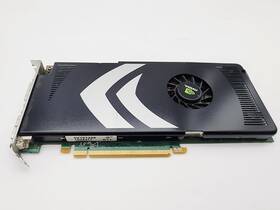
( Brand: Nvidia ), ( Manufacturer Part Number: 8800GT ), ( Model: 0V101298 ), ( Type: Video Graphics Card ), ( Country Of Origin: China )
Review NVIDIA 512mb Geforce Pcie X16 Video Graphics Card
The **NVIDIA GeForce 8800 GT (PCIe x16) with 512MB GDDR3 Memory (Model 0v101298)** is a high-performance graphics card designed to deliver smooth, immersive visuals for gaming, content creation, and professional applications during its era, bridging the gap between the mid-range and high-end segments with its robust architecture and balanced feature set. Built on NVIDIA s **G80 GPU core**, this card leverages the **Unified Shader Architecture**, introducing a more efficient and scalable design that reduces bottlenecks compared to its predecessor, the 8600 GT. The **PCI Express x16 interface** ensures seamless integration with modern motherboards, providing the bandwidth necessary for high-resolution gaming, 3D rendering, and multimedia tasks without compromising system stability. With **512MB of GDDR3 memory** clocked at a robust speed, the 8800 GT excels in handling modern titles at resolutions up to **1920x1200** while supporting advanced features like **PhysX physics acceleration**, **PureVideo HD** for hardware-accelerated video decoding, and **CUDA cores** a pioneering technology that expanded its utility beyond gaming into scientific computing and creative workflows.
Visually, the card features a **dual-slot design** with a sleek, low-profile heatsink and fan assembly, ensuring efficient cooling while maintaining a compact footprint ideal for mid-tower cases. The **PCIe x16 slot** connection guarantees compatibility with ATX and micro-ATX motherboards, making it a versatile choice for both enthusiasts upgrading their systems and budget-conscious builders seeking a reliable upgrade from integrated graphics or older discrete GPUs. Under the hood, the **G80 core** operates at a **base clock speed of 575 MHz**, with the memory running at **800 MHz**, delivering a solid performance boost over its competitors like the ATI Radeon HD 2600 XT. The card supports **DirectX 10**, enabling access to cutting-edge visual effects such as **HDR rendering, tessellation, and advanced shaders**, which were becoming increasingly prevalent in AAA titles of the late 2000s. Additionally, its **SLI (Scalable Link Interface) compatibility** allows for seamless multi-GPU setups, doubling or even tripling performance in supported games and applications, making it a future-proof investment for users planning to scale their systems further.
Beyond gaming, the **8800 GT s PhysX support** revolutionized the way physics were rendered in real-time, enhancing the realism of simulations in games like *Crysis* and *F.E.A.R.*, while **PureVideo HD** offloaded video decoding tasks from the CPU, improving battery life in laptops and reducing heat output in desktop configurations. The inclusion of **CUDA cores** also positioned this card as a tool for developers and engineers, enabling accelerated computations in fields like computational fluid dynamics, 3D modeling, and machine learning features that were groundbreaking for their time. Though now considered a legacy component by modern standards, the 8800 GT remains a fascinating piece of hardware history, embodying NVIDIA s transition from traditional shader architectures to the unified shader model that would define future generations of GPUs. For collectors, enthusiasts, or those seeking a reliable mid-range option for legacy systems, this card offers a compelling blend of performance, versatility, and historical significance.
### **Pros and Cons of the NVIDIA GeForce 8800 GT 512MB (PCIe x16, GDDR3)**
#### **Pros:**1. **Performance for Its Era** The 8800 GT was a capable mid-range GPU in its time (2007 2009), offering smooth performance in games like *Crysis*, *World of Warcraft*, and *Call of Duty 4* at moderate to high settings. It could handle 1080p gaming decently for its generation.
2. **DirectX 10 Support** The card was one of the first to support DirectX 10, enabling access to newer visual effects and games that leveraged the API.
3. **PhysX Acceleration** Early support for NVIDIA PhysX allowed for more realistic physics in some games, though this feature became less relevant over time.
4. **Low Power Consumption (for its class)** At around **120W TDP**, it was more power-efficient than high-end GPUs of its era (like the 8800 GTX), making it suitable for systems with modest power supplies.
5. **Affordability (Used Market)** As a mid-range card from the late 2000s, it is now very cheap (often under $20 $50 used), making it a budget option for retro gaming or legacy systems.
6. **Compatibility with Older Systems** Works well in older PCs with **PCIe x16 1.0/1.1 slots**, making it a viable upgrade for outdated rigs.
7. **No Modern Driver Issues** Unlike some older AMD cards, NVIDIA s drivers for the 8800 series were relatively stable, reducing the risk of crashes or compatibility problems.
---
#### **Cons:**1. **Extremely Outdated Technology** Released in **2007**, it lacks modern features like **ray tracing, DLSS, VRAM compression, or variable rate shading**. It will not run current games (2020s) at playable frame rates.
2. **512MB VRAM is Insufficient** While 512MB was decent in 2007, modern games (even older ones like *GTA V* or *The Witcher 3*) require **at least 2GB 4GB** for smooth performance. This card will struggle with anything beyond **very old games at low settings**.
3. **No PCIe 2.0 Support** The 8800 GT uses **PCIe 1.0/1.1**, which is significantly slower than modern PCIe 3.0/4.0. This limits bandwidth and can bottleneck older CPUs.
4. **No Modern APIs or Features**
- No **Vulkan** or **DirectX 12** support.
- No **OpenGL 4.0 ** (maxes out at **OpenGL 3.3**).
- No **CUDA cores** (useful for some older GPU computing tasks).
- No **AV1 encoding** or **hardware ray tracing**.
5. **Thermal and Noise Considerations** Older GPUs like this often run **hot and loud** under load, especially in poorly ventilated cases. Expect **high fan noise** during gaming.
6. **Limited Overclocking Potential** While some 8800 GT models could be overclocked, modern GPUs offer far better performance-per-watt. This card s headroom is minimal.
7. **No DisplayPort or HDMI 1.4 ** Outputs are typically **DVI and VGA**, limiting modern display options (no HDMI 2.0, no USB-C, no 4K support).
8. **Power Supply Requirements**
- While not extremely power-hungry, it still needs a **400W PSU** with a **6-pin PCIe connector** (some older PSUs may lack this).
- Modern PSUs with **8-pin connectors** will not work without an adapter.
9. **No Support for Modern Operating Systems**
- **Windows 10/11** may not run properly (drivers are outdated).
- **Linux support** exists but is limited (no official drivers for newer kernels).
- **No security updates** (vulnerable to older exploits).
10. **No Future-Proofing** Even for **retro gaming**, newer cards (like **GTX 650 Ti, RX 550, or even a 1050 Ti**) offer better performance, lower power draw, and modern connectivity.
---
### **Ending Conclusion:** The **NVIDIA GeForce 8800 GT 512MB** is a **niche, budget-friendly card** best suited for:- **Legacy gaming** (games from **2005 2010** at low settings).
- **Old-school PC builds** where you need a cheap GPU for a **retro rig**.
- **Learning purposes** (understanding how GPUs worked in the past).
- **Minimalist projects** (e.g., running **DOSBox, old CAD software, or emulation**).
**However, it is not a viable choice for:**- Playing **modern or even mid-2010s games** (will not run anything beyond **2008 2010 titles** at playable speeds).
- **Productivity tasks** (no CUDA, no modern compute capabilities).
- **Any serious future use** (drivers, security, and performance will be limiting).
---
### **Recommendation:** - **If you need a cheap GPU for retro gaming (2005 2010):** - The **8800 GT is fine**, but consider **cheaper alternatives** like:- **ATI Radeon HD 4850/4870** (better VRAM, slightly better performance).
- **NVIDIA GTX 650 Ti** (modern PCIe 2.0, better efficiency).
- **AMD RX 550/560** (better value for old games).
- **If you want a modern budget GPU for retro gaming:**- A **used GTX 1050 Ti, RX 560, or even a GTX 1650** will run **2010s games at low settings** and cost little more than the 8800 GT.
- **If you're building a modern PC:**- **Avoid this card entirely** even a **$30 used GTX 1050** will be far more useful.
- **If you're restoring an old PC for nostalgia:**- The 8800 GT is **fine for a throwback**, but pair it with a **modern PSU, CPU, and RAM** for better longevity.
**Final Verdict:**The **8800 GT 512MB is a curiosity for enthusiasts**, but **not a practical choice for anything beyond very old gaming**. If you're on a tight budget and only need to run **games from 10 years ago**, it s a **cheap but limited** option. For anything else, **look for a newer (but still budget) GPU** for better long-term usability.
Details:
part #: 8800gt prices
- $19.99-$45.00
specifications hvaapa:
- brand: Nvidia
- mpn: 8800gt
- model: 0v101298
- type: Video Graphics Card
- country of origin: China
general hvaapa:
- condition: Used
- HVAC Refrigeration > HVAC Refrigeration: Parts Accessories > HVAC Refrigeration: Controls Circuit Boards
shipping hvaapa:
- service: USPS Priority Mail, UPS Next Day Air
- carrier: USPS, UPS
- transit: 4-9 Days
- type: Fixed
- class: Expedited, One-day
- cost: $0.00
offer hvaapa:
- options: Ship-to-home
- availability: In Stock
- best offers: True
- sold: 0
- quantity: 1
- started: April 9, 2026
payments hvaapa:
- wallet: Paypal
- other
- credit card: Mastercard
seller hvaapa:
- city: Greensboro, North Carolina
- rating: 100.0%
- # reviews: 465
returns hvaapa:
- method: Money back
- policy: Returns Accepted
- time: 30 Days
- paid by: Buyer
