ISLANDAIRE Ptac Board Ild 803300300958 Islandaire/ptac V1.3 2016-06-24/
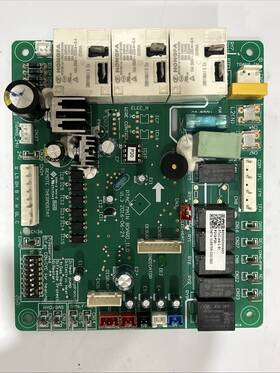
( Brand: Islandaire ), ( Part Type: Board ), ( Voltage: 24 V ), ( Year Manufactured: 2016 ), ( UPC: 803300300958 )
Review ISLANDAIRE Islandaire/ptac Main Board Ild V1.3 2016 0624/
The **Islandaire 803300300958 PTAC Board (ILD V1.3, Model 803300300958, Revision 2016-06-24)** is a high-performance, modular control board designed exclusively for Islandaire s line of **Packaged Terminal Air Conditioner (PTAC) and Heat Pump (PTHP) units**, ensuring seamless integration with their advanced HVAC systems. Engineered with precision and built to withstand the demands of commercial and hospitality environments, this board serves as the central nervous system for the unit, managing critical functions such as defrost cycles, compressor protection, fan sequencing, and energy-efficient operation. The **ILD V1.3** revision reflects a refined design with enhanced reliability, improved diagnostics, and optimized compatibility with Islandaire s latest refrigerants and control protocols, including support for **R-410A and R-32** systems. Constructed with robust, industrial-grade components, the board features a **high-density circuit layout** that minimizes wiring complexity while maximizing efficiency, reducing potential points of failure and simplifying maintenance. Its **modular design** allows for easy troubleshooting and component replacement, ensuring minimal downtime during servicing. The board incorporates **advanced safety features**, including overcurrent protection, short-circuit detection, and thermal overload safeguards, to prevent equipment damage and extend the lifespan of the PTAC unit. Additionally, it includes **user-friendly diagnostic LEDs** and **error codes** that provide clear, actionable feedback for technicians, streamlining repair processes. Whether installed in a hotel, office building, or healthcare facility, this control board ensures consistent performance, energy efficiency, and compliance with industry standards, making it an indispensable component for Islandaire s high-reliability HVAC solutions.
### **Pros and Cons of buying a Islandaire 803300300958 (PTAC Board ILD V1.3, 2016-06-24)**
#### **Pros:**1. **Efficiency and Performance** PTAC (Packaged Terminal Air Conditioner) units like this one are designed for high efficiency, providing both heating and cooling in a single unit. The Islandaire brand is known for reliability, and this model appears to be a commercial-grade unit, which typically offers better performance than residential systems.
2. **Space-Saving Design** PTAC units are wall-mounted and self-contained, meaning they do not require extensive ductwork. This makes them ideal for small spaces, hotel rooms, or office environments where duct installation is impractical.
3. **Easy Installation and Maintenance** Since PTACs are standalone units, installation is generally simpler than central HVAC systems. They also require less frequent maintenance compared to larger HVAC setups, though regular filter changes and coil cleaning are still necessary.
4. **Zoned Heating and Cooling** Because PTACs operate independently, they allow for precise temperature control in individual rooms or small areas, which is useful in multi-tenant buildings or spaces where uniform climate control is not required.
5. **Energy Efficiency (Compared to Older Models)** The 2016 model year suggests it may comply with newer energy efficiency standards, though exact SEER (Seasonal Energy Efficiency Ratio) or HSPF (Heating Seasonal Performance Factor) ratings should be verified. Modern PTACs often have better energy efficiency than older models.
6. **Quiet Operation (Relative to Older Units)** Newer PTAC units tend to be quieter than older models, though noise levels can still vary. The specific decibel rating for this unit should be checked if noise is a concern.
7. **Commercial-Grade Durability** Islandaire is a brand associated with commercial HVAC equipment, which typically means the unit is built to withstand heavier use compared to residential units. This could translate to longer lifespan if properly maintained.
8. **Flexibility in Placement** PTACs can be installed in various locations, including windows or walls, depending on the model. This flexibility can be advantageous in retrofitting existing spaces.
---
#### **Cons:**1. **Limited Lifespan Compared to Central HVAC** PTAC units generally have a shorter lifespan (10 15 years) compared to central HVAC systems (20 years). If this unit is already 8 10 years old (as of 2024), it may be nearing the end of its useful life, requiring potential replacement soon.
2. **Higher Upfront Cost** While PTACs can be cost-effective in the short term, the initial purchase price may be higher than some residential alternatives, especially if labor costs for installation are included.
3. **Energy Consumption Over Time** Older PTAC units (even if relatively new by commercial standards) may not be as energy-efficient as the latest models. If energy costs are a concern, upgrading to a newer, more efficient unit could save money in the long run.
4. **Maintenance Requirements** PTACs require regular maintenance, including cleaning coils, replacing filters, and checking refrigerant levels. Neglecting maintenance can lead to reduced efficiency, higher energy bills, and potential breakdowns.
5. **Potential for Higher Operating Costs** If the unit is not properly sized for the space or is outdated, it may struggle to maintain comfortable temperatures efficiently, leading to higher energy consumption.
6. **Refrigerant Regulations** Older PTAC units may use refrigerants that are being phased out due to environmental concerns (e.g., R-22). If this unit uses such a refrigerant, future servicing could become more expensive or difficult. Checking the refrigerant type is crucial.
7. **Limited Cooling Capacity for Large Spaces** PTACs are best suited for small to medium-sized rooms. For larger areas, multiple units may be needed, increasing complexity and cost.
8. **Potential for Condensation and Mold Issues** PTACs can produce condensation, which, if not properly drained, can lead to water leaks or mold growth. Regular inspection of drainage systems is necessary.
9. **Resale Value** Unlike central HVAC systems, PTACs are not typically transferable between properties. If you plan to sell the space, the unit may not add value and could be a point of negotiation.
10. **Noise and Aesthetics** PTACs can be visually intrusive, especially in residential settings. They also tend to be louder than ductless mini-splits, which may be a drawback in quiet environments.
---
### **Conclusion:**The Islandaire 803300300958 PTAC unit is a functional and reliable option for heating and cooling small to medium-sized spaces, particularly in commercial or multi-tenant settings. Its pros such as ease of installation, zoned control, and commercial-grade durability make it a practical choice for many applications. However, its cons including limited lifespan, potential energy inefficiency, and higher maintenance needs must be carefully considered, especially if the unit is approaching the end of its expected service life.
If the unit is in good working condition, properly maintained, and the space it serves is appropriately sized for its capacity, it can be a sound purchase. However, if energy efficiency, long-term cost savings, or modern features are priorities, upgrading to a newer model (e.g., one with higher SEER/HSPF ratings and eco-friendly refrigerants) may be worth the investment.
---
### **Recommendation:** - **Buy if:**- You need a reliable, standalone heating and cooling solution for a small to medium space (e.g., hotel room, office, or retail area).
- The unit is in good condition, with no major mechanical issues, and you are prepared for regular maintenance.
- The cost of purchasing and maintaining this unit is justified by your budget and the unit s expected lifespan.
- You are not concerned about the unit s age (as of 2024) and can afford potential future repairs or replacement.
- **Consider alternatives if:**- You are looking for a more energy-efficient solution (e.g., a newer PTAC or a ductless mini-split system).
- The unit uses an outdated refrigerant (e.g., R-22), which may become harder or more expensive to service.
- The space you are servicing is large, and multiple units or a different system (e.g., central HVAC) would be more cost-effective.
- You prioritize long-term energy savings and are willing to invest in a newer, more efficient model.
- **Before purchasing:**- Verify the unit s exact specifications (capacity, SEER/HSPF ratings, refrigerant type, and noise levels).
- Check for any existing issues (e.g., leaks, unusual noises, or inefficiency) and factor in repair costs.
- Compare the cost of purchasing this unit against the cost of a newer model or alternative systems to ensure it aligns with your budget and goals.
In summary, this PTAC unit is a viable choice for specific applications but may not be the most future-proof or energy-efficient option. Weigh its pros and cons carefully against your needs and long-term plans.
Details:
Condition is Used. Shipped with USPS Ground Advantage. IslandAire/PTAC MAIN BOARD ILD V1.3 2016 -06-24/ 8.
part #: 803300300958 price
- $60.00
specifications hvaapa:
- brand: Islandaire
- part type: Board
- voltage: 24 V
- year manufactured: 2016
- upc: 803300300958
seller hvaapa:
- city: Warminster, Pennsylvania
- # reviews: 1015
- rating: 99.9%
payments hvaapa:
- credit card: Discover
- wallet: Paypal
- other
returns hvaapa:
- method: Money back
- paid by: Buyer
- time: 30 Days
- policy: Returns Accepted
offer hvaapa:
- sold: 0
- quantity: 1
- availability: In Stock
- options: Ship-to-home
- started: June 9, 2026
- best offers: True
shipping hvaapa:
- cost: $9.69
- class: Standard
- carrier: USPS
- type: Calculated
- service: USPS Ground Advantage
- transit: 3-7 Days
general hvaapa:
- HVAC Refrigeration > HVAC Refrigeration: Parts Accessories > HVAC Refrigeration: Controls Circuit Boards
- condition: Used
Islandaire 803300300958 Is Similar To:
- 4090661 Islandaire Ptac Drain Kit (40.4% similar) Free shipping continental us. New external drain kit to prevent condensate from overflowing inside structure and damaged walls,flooring, etc. Instructions included and could probably be used on many other units...(August 12th, 2019)
- Islandaire 803300300953 Main Control Circuit Board Ptac-mb-c-b1 (53.7% similar) Ask any question before purchasing. Used in excellent working condition. Islandaire main control circuit board, it is designed to regulate and control the various functions of system, ensuring optimal performance efficiency. PTAC-MB-C-B1...(August 5th, 2024)
- Islandaire C0rg8854a 803300400019 Display Board Ptac-ob-c-a01 E56334 (50.4% similar) Islandaire 9 display board PTAC-OB-C-A01 C0RG8854A E56334. Condition is used. Shipped with USPS ground advantage...(January 31st, 2025)
- Islandaire 803300301017 Main Control Circuit Board Ptac-mb-c-b1 P207 p20 (51.7% similar) Islandaire 3 main control circuit board PTAC-MB-C-B1. Condition is used. Shipped with USPS ground advantage...(January 31st, 2025)
- Islandaire 803300400017 Display Board Ptac-ob-g-a01 E320265 (50.8% similar) Condition is used. Shipped with USPS ground advantage. Islandaire display board PTAC-OB-G-A01 7 E320265...(February 21st, 2025)
- Islandaire 803300400026 Ptac Display Board Ptac-ob-g-a02 (55.1% similar) Islandaire 6 ptac display board PTAC-OB-G-A02. Shipped with USPS ground advantage. Condition is used...(June 27th, 2025)
- Islandaire Ptac-mb-c-f1 803300301036 Main Control Circuit Board Used d220 (49.7% similar) Most of the parts require specific knowledge and skills to be installed properly. Old system was replaced with new one and in good working condition. There is no warranty on used parts. This part is in very good used condition. Please see more details from the images attached. This part was removed ...(August 11th, 2025)
- Islandaire 803300301016 Ptac-mb-c-b1 Ptac Main Board Ild V1.3 2016-06-24 (78.6% similar) Condition is used. Islandaire PTAC-MB-C-B1 / 6 ptac main board ild V1.3 2016 -06-24. Shipped with USPS ground advantage...(June 9th, 2026)
