FENWAL 35-662948-13 Automatic Ignition Control 35-662948-013
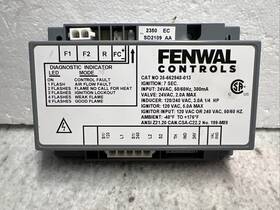
( Brand: Fenwal ), ( Manufacturer Part Number: 35-662948-13 ), ( Type: Ignition Control System ), ( Power Source: Corded Electric ), ( Country Of Origin: United States )
Review FENWAL Automatic Ignition Control System Used
The **Fenwal 35-662948-13 (and its variant, the 35-662948-013) Automatic Ignition Control** is a precision-engineered component designed to enhance the reliability and performance of ignition systems in critical applications, particularly within aerospace, defense, and industrial machinery. This robust unit serves as a sophisticated control module that automates the ignition process, ensuring seamless and consistent operation under varying environmental and operational conditions. Engineered with Fenwal s reputation for high-performance instrumentation in mind, this device integrates advanced electronic circuitry and mechanical reliability to deliver dependable ignition control, making it an ideal choice for systems where fail-safe operation is paramount.
The **35-662948-13** and **35-662948-013** are designed to interface with ignition sources such as pyrotechnic devices, gas generators, or other explosive systems, providing precise timing and activation control. Their compact yet durable construction allows for integration into tight spaces within aircraft, missiles, or ground-based platforms, where space and weight efficiency are critical factors. The unit features a robust housing, often constructed from corrosion-resistant materials, to withstand harsh conditions, including extreme temperatures, vibrations, and high-altitude environments. This ensures long-term reliability and minimizes the risk of failure during critical operations.
At the core of its functionality, the **Automatic Ignition Control** operates through a combination of electronic sensors and actuators, which monitor system parameters and trigger ignition events with millisecond precision. The device is capable of handling multiple ignition cycles, making it suitable for applications requiring repeated or sequential activations, such as in emergency deployment systems or redundant safety mechanisms. Its design also incorporates fail-safe features, such as redundant circuits or self-diagnostic capabilities, to prevent catastrophic failures and ensure operational integrity even under adverse conditions.
For engineers and technicians, the **Fenwal 35-662948-13/013** offers a balance of simplicity and sophistication, with straightforward wiring and mounting interfaces that facilitate easy integration into existing systems. Whether deployed in a military aircraft s ejection seat, a missile s propulsion system, or an industrial safety mechanism, this component ensures that ignition events occur predictably and without human intervention, reducing the potential for error. Its compatibility with a wide range of ignition sources and control systems further enhances its versatility, making it a trusted solution for industries where precision and reliability are non-negotiable.
In summary, the **Fenwal 35-662948-13 (and 35-662948-013)** Automatic Ignition Control represents a pinnacle of engineering excellence, combining durability, precision, and adaptability to meet the demands of high-stakes applications. Its role in ensuring reliable ignition control underscores its importance in systems where the difference between success and failure can be measured in fractions of a second.
### **Pros and Cons of buying a Fenwal 35-662948-13 / 35-662948-013 Automatic Ignition Control**
#### **Pros:**1. **Compatibility with Older Systems** These units are designed for legacy aircraft ignition systems, particularly those using the older Fenwal or similar ignition control units. They are commonly found in piston-engine aircraft like the Cessna 172, 182, 206, and other models from the mid-20th century.
2. **Reliability in High-Vibration Environments** Fenwal components are known for durability in aircraft applications, where constant vibration and temperature fluctuations can degrade other electronic components.
3. **Easy Installation** Since these units are designed for aircraft, they often come with wiring diagrams and mounting hardware, making retrofitting or replacement relatively straightforward for experienced mechanics.
4. **Aftermarket Availability** Fenwal parts are still widely available through aviation suppliers, making repairs and replacements easier than with obsolete or discontinued components.
5. **Proven Performance** These units have been used for decades in aviation, meaning they have undergone extensive field testing and are generally dependable when properly installed and maintained.
6. **Lower Cost Compared to Newer Alternatives** While not the cheapest component, these units are often more affordable than fully modernized ignition control systems, making them a cost-effective solution for older aircraft.
---
#### **Cons:**1. **Age-Related Wear** Since these units are from an older design era, internal components (such as relays, switches, or wiring) may degrade over time, leading to intermittent failures or complete failure.
2. **Limited Modern Support** Fenwal no longer actively manufactures these units, so troubleshooting or finding replacement parts may require sourcing from third-party suppliers, which could introduce delays or compatibility issues.
3. **Potential for Obsolescence** Some newer aircraft or modified systems may not fully integrate with these older units, requiring additional adapters or modifications.
4. **Dependence on Manuals and Experience** Proper installation and testing require familiarity with aircraft ignition systems. Incorrect wiring or calibration can lead to engine misfires or failure.
5. **No Built-In Diagnostics** Unlike modern electronic ignition control units (ECUs), these mechanical/relay-based systems lack self-diagnostic features, making fault identification more difficult.
6. **Environmental Sensitivity** Exposure to moisture, corrosion, or extreme temperatures can shorten the lifespan of these units, especially if they are not properly sealed or maintained.
---
### **Conclusion:**The **Fenwal 35-662948-13 / 35-662948-013 Automatic Ignition Control** is a **practical and cost-effective solution** for aircraft owners maintaining older models that rely on this specific component. Its **proven reliability, widespread availability, and compatibility with legacy systems** make it a strong choice for those who prioritize functionality over cutting-edge technology.
However, **potential drawbacks such as age-related wear, limited modern support, and the need for experienced installation** mean that this unit is best suited for **experienced mechanics or aircraft owners comfortable with troubleshooting mechanical/relay-based systems**. If the aircraft is frequently flown in harsh conditions or if modern diagnostics are a priority, exploring **upgraded ignition control units** (such as those from **BendixKing, Garmin, or other aviation electronics manufacturers**) may be worth the investment for long-term reliability.
---
### **Recommendation:** - **Buy if:**- You are maintaining an older aircraft (e.g., Cessna 172, 182, 206, or similar) that requires this specific Fenwal unit.
- You have access to a mechanic experienced in aircraft ignition systems.
- You prefer a **proven, low-cost solution** over a more expensive modern alternative.
- You can source genuine or high-quality aftermarket replacements if needed.
- **Consider alternatives if:**- Your aircraft is undergoing a major upgrade or modernization.
- You want **built-in diagnostics, better reliability, or reduced maintenance** in which case, a **modern ignition control unit** (e.g., BendixKing KI 200 or similar) may be preferable.
- You frequently fly in **harsh environments** where corrosion or vibration could accelerate failure.
For most **older, well-maintained aircraft**, the Fenwal unit remains a **solid choice** but weigh the trade-offs carefully based on your specific needs and budget. Always **inspect the unit thoroughly before purchase** and ensure proper installation to maximize longevity.
Details:
In great shape.
part #: 3566294813 price
- $33.00
specifications hvaapa:
- brand: Fenwal
- mpn: 35-662948-13
- type: Ignition Control System
- power source: Corded Electric
- country of origin: United States
offer hvaapa:
- options: Ship-to-home
- quantity: 1
- started: May 30, 2026
- sold: 0
- availability: In Stock
general hvaapa:
- condition: Used
- HVAC Refrigeration > HVAC Refrigeration: Parts Accessories > HVAC Refrigeration: Controls Circuit Boards
seller hvaapa:
- # reviews: 4699
- rating: 100.0%
- city: Bradenton, Florida
returns hvaapa:
- policy: Returns Accepted
- time: 30 Days
- paid by: Seller
- method: Money back
shipping hvaapa:
- service: UPS Ground
- carrier: UPS
- cost: $8.00
- transit: 4-9 Days
- type: Fixed
- class: Standard
payments hvaapa:
- other
- wallet: Google-pay
- credit card: Mastercard
Fenwal 35-662948-13 Is Similar To:
- 06-231654-001 Fenwal Ignition Control Module Used Free Shipping (44.4% similar) This is Fenwal ignition control module used part. There is no warranty on used parts. In good cosmetic condition. Please see more details from the images attached. Purchasing used parts you agree with the statement that sometimes hidden defects or malfunctions may occur during installation ...(June 24th, 2018)
- 17300-0 Fenwal Thermoswitch Control Nsn (36% similar) ...(February 3rd, 2018)
- 35-530501-003 Fenwal Ignition Controls Control (42.4% similar) Warranty issues with all power equipment must be addressed through the manufacture. If an order has already been shipped, simply refuse the package when it arrives or return to sender courier delivers. Control board, 12VDC model: made in:USA manufacturer:Fenwal ignition controls weight. For warranty...(April 25th, 2017)
- 35-605606-111 Fenwal Igniton Control Module (41.7% similar) I will always do my best to describe items as accurately possible...(January 23rd, 2018)
- 35-605959-223 Fenwal Ignition Controls Control (42.4% similar) If an order has already been shipped, simply refuse the package when it arrives or return to sender courier delivers. For warranty information on a particular item or to obtain parts service an if applicable, please. If you are having trouble contacting the manufacture, or not satisfied with a ...(June 28th, 2017)
- 35-615526-115 Fenwal Ignition Controls Control Board (41.9% similar) If you are having trouble contacting the manufacture, or not satisfied with a manufactures service, please. Mon-Fri 7AM-4:30PM CST. Further warranty may be offered by the product manufacturer. Control board, 24V model: made in:china manufacturer:Fenwal ignition controls weight. Warranty issues with ...(January 8th, 2017)
- 35-615922-125 Fenwal Ignition Controls Control Board (41.9% similar) For warranty information on a particular item or to obtain parts service an if applicable, please. Warranty issues with all power equipment must be addressed through the manufacture. Control board, 24V model: made in:china manufacturer:Fenwal ignition controls weight. If you are having trouble ...(February 9th, 2017)
- 35-652505-003 Fenwal Ignition Module Field Selectable Line Voltage New Box Open (29.1% similar) The microprocessor circuit design provides precise, repeatable timing sequences for ignition and purge times pre-, inter-, post as well multiple tries. Features:safe start and full-time flame SENSING120 240 field delectable line voltage for use with 120 vac ignitable this was purchased as new to ...(October 30th, 2018)
- 35-655311-005 Fenwal New Hvacautomatic Ignition System 24 (51.2% similar) 0AMAX 24 VAC3. Part number features safe start and full-time flame SENSING120 240 field delectable line voltage for use with 120 vac ignite OPTION24 hot surface model's available blower control airflow switch monitoring option diagnostic led multiple trials ignition automatic reset option local or...(February 25th, 2018)
- 35-655930-001 Fenwal Ignition Control Oem (46% similar) We require a model and serial for any warranty replacements. The best way to is through messaging system. All brand names and logos are property of their respective owners used for identification purpose only. If you want to search for your model quickly, use the control-f option in windows. This is...(February 22nd, 2017)
