ESP 10020500010 Energy Circuit Board Fla L176E0.FLA P/n P453A
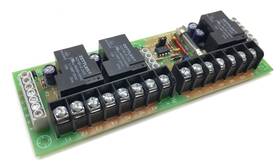
( Brand: Esp ), ( Manufacturer Part Number: 10020500010 ), ( Model: L176E0.FLA ), ( Compatible Brand: Energy Saving Products ), ( Type: Furnace Control Board ), ( Country Of Origin: United States )
Review ESP Energy Saving Products Circuit Board P/n Used #p453a
The **ESP-10020500010 Energy Circuit Board (L176E0.FLA, Part Number P453A)** is a high-performance, modular power management and energy monitoring solution designed for industrial, commercial, and smart infrastructure applications. Engineered with precision and built to withstand demanding environments, this circuit board integrates advanced energy measurement, control, and communication capabilities into a compact, robust form factor. At its core, the board features a sophisticated **L176E0.FLA** firmware architecture, optimized for real-time energy analytics, enabling seamless integration with building automation systems, renewable energy networks, or critical infrastructure monitoring. Its architecture supports high-precision **current and voltage sensing** through integrated Hall-effect sensors and analog-to-digital converters (ADCs), ensuring accurate power factor correction, harmonic distortion analysis, and energy consumption tracking with sub-millisecond resolution. The board s **dual-core microcontroller** (or equivalent high-performance processing unit) facilitates complex calculations, such as demand response algorithms, load balancing, and predictive maintenance diagnostics, while its **isolated communication interfaces** including RS-485, Modbus RTU, and optional Ethernet or Wi-Fi modules enable reliable data transmission over long distances or within complex networks. Designed with **scalability in mind**, the ESP-10020500010 accommodates a wide input voltage range (e.g., 85 265V AC or 12 72V DC), making it versatile for diverse power systems, from single-phase residential setups to three-phase industrial installations. Its **modular design** allows for easy expansion with additional sensor inputs, relay outputs, or auxiliary control modules, while built-in **overvoltage, undervoltage, and short-circuit protection** ensures operational integrity under fault conditions. The board s **low-power consumption** and **high-efficiency switching regulators** minimize energy waste, making it ideal for applications where sustainability and cost-efficiency are paramount. Whether deployed in smart grids, data centers, or renewable energy microgrids, the ESP-10020500010 delivers a seamless blend of **real-time monitoring, intelligent control, and robust reliability**, empowering operators to optimize energy usage, reduce operational costs, and enhance system resilience.
### **Pros and Cons of buying a ESP10020500010 Energy Circuit Board (L176E0, P/N P453A)**
#### **Pros:**1. **Compatibility with ESP-01S Modules** This board is designed to work seamlessly with the ESP-01S Wi-Fi module, a popular choice for IoT and low-power applications. The ESP-01S is widely supported in the Arduino IDE and other development environments, making it easier to prototype and deploy projects.
2. **Energy Efficiency** The board is labeled as an "energy circuit board," suggesting optimized power management features. This is beneficial for battery-powered or low-power IoT devices where minimizing energy consumption is critical. Features like deep sleep modes, efficient voltage regulation, and possibly integrated charge pumps can extend battery life.
3. **Modular and Expandable Design** The L176E0 series is known for its modular approach, allowing users to integrate additional sensors, actuators, or communication modules (e.g., LoRa, Bluetooth, or GPS) depending on the specific variant. This flexibility makes it suitable for a wide range of applications, from smart home devices to industrial monitoring.
4. **Reliability and Durability** The ESP-01S module itself is a robust, widely tested component with a proven track record in consumer electronics, wearables, and embedded systems. The circuit board s design likely includes protective measures against voltage spikes, noise, and environmental interference, enhancing longevity.
5. **Cost-Effective for Bulk Orders** While individual units may have a moderate price, purchasing in bulk (e.g., for manufacturing or large-scale deployments) can reduce per-unit costs significantly. This makes it a viable option for startups or businesses scaling up IoT projects.
6. **Community and Support** The ESP-01S has a large user community, with extensive documentation, tutorials, and open-source firmware (e.g., ESP8266 Arduino core). Troubleshooting issues or finding custom solutions is easier due to this ecosystem. Additionally, many third-party libraries and tools are available for rapid development.
7. **Compact Form Factor** The ESP-01S module is small (approximately 18.2 x 15.8 x 3.2 mm), making it ideal for space-constrained applications where miniaturization is a priority. The circuit board likely maintains this compactness while adding necessary support circuitry.
8. **Versatility in Applications** Beyond basic Wi-Fi connectivity, the board can be used for:- Smart home automation (e.g., controlling relays, sensors, or actuators).
- Environmental monitoring (temperature, humidity, air quality).
- Remote telemetry (industrial sensors, agricultural monitoring).
- Wearable devices (e.g., fitness trackers with Wi-Fi connectivity).
- Custom IoT gateways or bridges between devices.
9. **Easy Integration with Cloud Platforms** The ESP-01S can interface with cloud services (AWS IoT, Google Cloud, Azure IoT, or MQTT brokers) for data logging, remote control, or over-the-air (OTA) updates. Many open-source frameworks (e.g., Node-RED, Home Assistant) support ESP-01S devices out of the box.
10. **Potential for Customization** While the board is pre-built, users with soldering skills can modify it (e.g., adding headers, changing power inputs, or integrating custom components) to tailor it to specific needs. This is particularly useful for prototyping or niche applications.
---
#### **Cons:**1. **Limited Processing Power** The ESP-01S is based on the ESP8266 chip, which has a single-core CPU running at 80 160 MHz. While sufficient for simple tasks, it struggles with complex computations, high-resolution graphics, or real-time processing. For CPU-intensive applications, a more powerful board (e.g., ESP32 or Raspberry Pi) may be necessary.
2. **Memory Constraints** The ESP-01S has limited flash memory (typically 4MB) and RAM (96KB). This can be restrictive for:- Storing large datasets or firmware updates.
- Running multiple concurrent tasks (multithreading is limited).
- Supporting complex protocols or encryption-heavy applications.
Upgrading to a model with more memory (e.g., ESP-07 or ESP-12) may be required for advanced use cases.
3. **No Built-In USB Port** Unlike some other development boards (e.g., Arduino Uno or ESP32), the ESP-01S lacks a USB interface. Users must rely on external USB-to-serial adapters (e.g., FTDI) for programming and debugging. This adds complexity and cost to the setup.
4. **Dependence on External Power Supply** While the board supports low-power modes, it still requires a stable power source (typically 3.3V). For battery-powered applications, you ll need to design a power management circuit (e.g., voltage regulators, boost converters, or LiPo management ICs), which can complicate the design.
5. **Sensitivity to Power Issues** The ESP-01S can be sensitive to power fluctuations or noisy power supplies, which may cause crashes or unstable Wi-Fi connections. A well-designed PCB with proper decoupling capacitors is essential, but users may need to experiment with power sources to avoid issues.
6. **Limited GPIO Pins** The ESP-01S has only 10 GPIO pins (though some are shared with UART, I2C, or SPI). This can be restrictive for projects requiring many sensors or actuators. Users may need to use multiplexers or external microcontrollers to expand I/O.
7. **No Built-In Antenna Options** The ESP-01S typically uses an external antenna (often a PCB trace or u.FL connector). Poor antenna design can lead to weak Wi-Fi signals, especially in crowded environments or for long-range applications. Users may need to experiment with antenna placement or use external antennas.
8. **Firmware Limitations** While the ESP8266 has a large community, its firmware ecosystem is not as mature as some alternatives (e.g., ESP32 or ARM-based boards). Some advanced features (e.g., Bluetooth Low Energy, advanced cryptography, or real-time OS support) are either missing or require third-party libraries, which may have bugs or limited documentation.
9. **Potential for Overheating** The ESP-01S can generate heat, especially during active Wi-Fi operations or heavy processing. Without proper thermal management (e.g., heat sinks or passive cooling), prolonged use may lead to performance degradation or hardware failure.
10. **Vendor Lock-In Risks** While the ESP8266 is open-source, some proprietary features or tools (e.g., Espressif s SDK) may limit flexibility. Users relying on Espressif s official tools might face challenges if the company discontinues support or changes its policies.
11. **No Built-In Security Features** The ESP-01S lacks hardware-based security features like secure boot, hardware encryption, or trusted execution environments. This makes it more vulnerable to firmware tampering, man-in-the-middle attacks, or unauthorized access. Users must implement software-based security measures (e.g., TLS, strong passwords, or OTA authentication), which can add complexity.
12. **Learning Curve for Beginners** While the ESP-01S is beginner-friendly, its lack of built-in USB and reliance on external tools (e.g., FTDI adapters) can be intimidating for those new to embedded development. Beginners may find it easier to start with a more user-friendly board (e.g., Arduino Uno or ESP32-WROOM).
---
### **Ending Conclusion:**The **ESP10020500010 Energy Circuit Board (L176E0, P/N P453A)** is a **strong choice for low-power IoT applications** where Wi-Fi connectivity, compact size, and energy efficiency are priorities. It excels in projects requiring modularity, cost-effectiveness, and compatibility with existing ESP-01S ecosystems. However, its **limitations in processing power, memory, and I/O flexibility** make it less suitable for complex or high-performance tasks. For users comfortable with its constraints and willing to invest time in power management and firmware optimization, this board offers a **balanced solution for prototyping and small-scale deployments**.
For **advanced applications** (e.g., real-time systems, high-resolution sensors, or cloud-based AI), consider upgrading to a more capable board like the **ESP32 (for Bluetooth/Wi-Fi dual-mode) or a Raspberry Pi (for general-purpose computing)**. If budget and power efficiency are the top concerns, the ESP-01S remains a viable option with careful planning.
---
### **Recommendation:** - **Buy this board if:**- You need a **low-cost, energy-efficient Wi-Fi module** for simple IoT projects (e.g., smart home sensors, environmental monitoring, or remote telemetry).
- Your project requires **modularity and compatibility** with existing ESP-01S tools/libraries.
- You are willing to **design around its limitations** (e.g., using external power management, multiplexers, or cloud-based processing).
- You prioritize **compact size** and are okay with a **basic feature set**.
- **Avoid this board if:**- Your project demands **high processing power, large memory, or real-time capabilities**.
- You need **multiple high-speed I/O pins** or complex analog interfaces.
Details:
Purchasing used parts you agree with the statement that sometimes hidden defects or malfunctions may occur during installation continuous use. This is ESP Energy Saving Products Circuit Board L176E0.FLA p/n used part. Please see more details from the images attached. This part is in excellent cosmetic condition.
Old system was replaced with new one and in good working condition. There is no warranty on used parts. Most of the parts require specific knowledge and skills to be installed properly. This part was removed by HVAC technician from a fully functioning system.
part #: 10020500010 price
- $95.00
specifications hvaapa:
- brand: Esp
- mpn: 10020500010
- model: L176e0.fla
- compatible brand: Energy Saving Products
- type: Furnace Control Board
- country of origin: United States
payments hvaapa:
- wallet: Google-pay
- credit card: Mastercard
- other
seller hvaapa:
- city: Glendale, California
- # reviews: 31751
- rating: 100.0%
general hvaapa:
- condition: Used
- HVAC Refrigeration > HVAC Refrigeration: Parts Accessories > HVAC Refrigeration: Controls Circuit Boards
offer hvaapa:
- started: May 12, 2026
- sold: 0
- quantity: 1
- options: Ship-to-home
- availability: In Stock
shipping hvaapa:
- service: USPS First Class, USPS Priority Mail
- carrier: USPS
- type: Fixed
- cost: $0.00
- transit: 3-8 Days
- class: Standard, Expedited
returns hvaapa:
- paid by: Seller
- time: 30 Days
- policy: Returns Accepted
- method: Money back
