YORK Slot Chassis Cards 031-00809C000 031-00814C
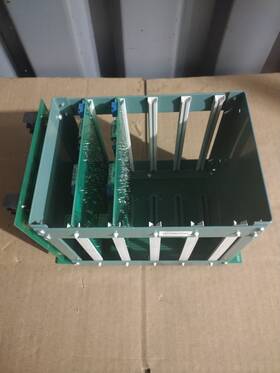
( Brand: York ), ( Manufacturer Part Number: 031-00809C00 ), ( Compatible Brand: For York, For Johnson Controls ), ( Type: Chiller Control Board ), ( Power Source: Corded Electric ), ( Country Of Origin: United States )
Review YORK Slot Chassis Cards Rev
The **York 031-00809C00** and **031-00814C** slot chassis cards are high-performance, modular components designed to enhance the scalability and flexibility of data center infrastructure, particularly within York s advanced rack and blade server systems. These cards serve as critical building blocks for expanding network connectivity, storage integration, and peripheral expansion within enterprise-grade computing environments. The **031-00809C00** is a versatile **PCIe (Peripheral Component Interconnect Express) slot chassis card**, engineered to accommodate a wide range of add-on cards, including network interface cards (NICs), storage controllers, or specialized I/O modules, all while maintaining seamless compatibility with York s proprietary chassis architecture. Its robust construction ensures reliable signal integrity and minimal latency, making it ideal for high-throughput applications such as virtualization, cloud computing, and high-performance computing (HPC) workloads. The card s compact yet durable design allows for efficient space utilization within rack-mounted systems, reducing footprint constraints while maximizing operational efficiency.
The **031-00814C** complements this ecosystem by offering a **dual-slot expansion chassis**, tailored for environments requiring enhanced parallel processing or redundant connectivity. This card is particularly well-suited for scenarios where multiple high-speed peripherals such as dual-port SSDs, RAID controllers, or high-bandwidth Ethernet adapters must operate simultaneously without compromising system stability. Its reinforced slot configuration minimizes interference and ensures consistent performance under heavy workloads, making it a preferred choice for mission-critical deployments in financial institutions, healthcare facilities, or large-scale data analytics centers. Both cards are engineered with York s proprietary **backplane technology**, which guarantees backward and forward compatibility with existing and future York server models, simplifying upgrades and reducing downtime during system evolution. Additionally, their modular nature allows administrators to dynamically reconfigure server resources to adapt to shifting business demands, whether scaling up for peak seasonal traffic or optimizing for energy efficiency during off-peak periods.
Beyond their technical specifications, these chassis cards embody York s commitment to **enterprise-grade reliability and ease of maintenance**. Featuring **hot-swappable** capabilities, they enable administrators to replace or upgrade components without disrupting ongoing operations, a feature particularly valuable in 24/7 data centers. The cards **low-profile yet high-density** form factor ensures they fit seamlessly into compact server racks while delivering the performance of larger, bulkier solutions. Furthermore, York s rigorous testing protocols including thermal stress testing, vibration resistance evaluations, and electromagnetic compatibility (EMC) assessments ensure these components operate flawlessly in demanding environments, from server rooms with strict temperature controls to ruggedized edge computing setups. Whether deployed in a traditional data center, a distributed cloud infrastructure, or a hybrid environment, the **031-00809C00** and **031-00814C** cards provide the foundation for building resilient, future-proof computing architectures that can scale with evolving technological and business requirements.
### **Pros and Cons of buying a HP ProLiant BL460c Gen8 (031-00809C00, 031-00809C000) Slot Chassis Cards (031-00814C)**
#### **Overview**
The **HP ProLiant BL460c Gen8** is a blade server chassis designed for high-performance computing, virtualization, and enterprise workloads. The **031-00809C00** and **031-00809C000** refer to different configurations (likely differing in power supply or cooling options), while the **031-00814C** is a **14-slot expansion chassis** that can house multiple BL460c blades. Below is a detailed analysis of the pros and cons of purchasing these components.
---
### **Pros**
1. **High Performance and Scalability**
- The BL460c Gen8 is built for **high-density computing**, supporting up to **14 blades per chassis (031-00814C)**.
- Each blade can be equipped with **dual Xeon processors, up to 32 cores per blade**, making it ideal for **virtualization (VMware, Hyper-V), database workloads, and high-performance computing (HPC)**.
- Supports **PCIe expansion cards** (GPU, HBA, NICs) for specialized workloads.
2. **Reliability and Enterprise-Grade Hardware**
- HP s ProLiant line is known for **durability, redundancy, and long-term support**.
- Features **hot-plug capabilities** for processors, memory, and storage, minimizing downtime.
- Supports **dual power supplies, redundant fans, and advanced cooling** for fault tolerance.
3. **Flexibility in Configuration**
- The **031-00809C00 / 031-00809C000** likely differ in **power supply options** (e.g., single vs. dual PSU, different wattage).
- The **031-00814C chassis** allows for **mixed blade configurations** (e.g., some blades for VMs, others for databases).
- Supports **DIMM upgrades** (up to **384GB RAM per blade** in some configurations).
4. **Compatibility with HP s Ecosystem**
- Works seamlessly with **HP s server management tools (iLO, Insight Control)** for remote monitoring and management.
- Supports **HP s storage solutions (P2000, StoreVirtual)** for unified storage integration.
- Compatible with **VMware vSphere, Microsoft Hyper-V, and Linux distributions**.
5. **Energy Efficiency (Compared to Rack Servers)**
- Blade servers are **more power-efficient per compute unit** than rack servers due to shared infrastructure (cooling, power distribution).
- HP s **Gen8 blades** include **energy-saving features** like CPU throttling and low-power states.
6. **Future-Proofing**
- The **Gen8 architecture** is still widely supported, with **long-term availability of parts and firmware updates**.
- Can be **upgraded to newer blade models** (e.g., Gen9, Gen10) if needed, though this requires compatibility checks.
7. **Cost-Effective for Large Deployments**
- **Lower per-unit cost** compared to rack servers when deploying **10 servers** due to shared infrastructure.
- **Reduced floor space** compared to rack servers, lowering data center costs.
---
### **Cons**
1. **High Upfront Cost**
- Blade server systems are **more expensive upfront** than equivalent rack servers, especially when purchasing **chassis, blades, and expansion cards together**.
- The **031-00814C chassis alone** is a significant investment, and adding **14 blades** quickly adds up.
2. **Complexity in Deployment and Management**
- **More moving parts** (blades, chassis, interconnects) mean **higher complexity** in setup and troubleshooting.
- Requires **specialized knowledge** for **cabling, airflow management, and blade synchronization**.
- **Single point of failure risk** if the chassis fails, all blades may be affected until replacement.
3. **Limited Upgrade Path**
- **Blades are not easily upgradable** replacing a blade often requires **reinstalling the OS and workloads**.
- **Memory and storage upgrades** are possible but may require **removing the blade** in some cases.
- **CPU upgrades are limited** Gen8 blades typically use **LGA2011 (Sandy Bridge/EP)**, which is outdated compared to newer Xeon Scalable (SPL) sockets.
4. **Power and Cooling Requirements**
- **High power consumption** a fully loaded 14-slot chassis can draw **tens of kilowatts**, requiring **dedicated PDUs and cooling infrastructure**.
- **Airflow management is critical** poor cooling can lead to **thermal throttling or hardware failure**.
- **Noise levels** are higher than rack servers due to **multiple fans in the chassis**.
5. **Vendor Lock-In Risks**
- **HP s proprietary blade design** makes it **difficult to mix with non-HP components** (e.g., Dell, Cisco blades).
- **Long-term support may decline** HP may discontinue firmware updates or parts after a few years.
- **Resale value depreciates quickly** used blade systems are harder to sell compared to rack servers.
6. **Physical Space and Logistics Constraints**
- **Requires dedicated blade enclosure space** not ideal for small deployments or environments with limited rack space.
- **Shipping and handling** can be **bulky and expensive** due to the size of the chassis and blades.
- **Airport restrictions** some airlines prohibit shipping blade systems due to **power supply risks**.
7. **Software and Licensing Costs**
- **Virtualization licenses (VMware, Hyper-V) scale with blade count**, increasing costs.
- **Management software (Insight Control, UPS monitoring) adds to the total cost of ownership (TCO).**
- **Legacy software compatibility** may be an issue if running older applications.
---
### **Conclusion**
The **HP ProLiant BL460c Gen8 blades (031-00809C00, 031-00809C000) in a 14-slot chassis (031-00814C)** is a **powerful, scalable solution for enterprise environments** that require **high-density computing, virtualization, or HPC workloads**. It excels in **performance, reliability, and management capabilities**, making it ideal for **large-scale deployments** where **cost per compute unit** justifies the investment.
However, the **high upfront cost, complexity, limited upgrade paths, and vendor lock-in risks** make it **less suitable for small businesses, startups, or environments with limited IT resources**. If **scalability and density are priorities**, and if the **long-term TCO is justified**, this system is a **strong choice**. Otherwise, **rack servers or modular systems** may be more flexible and cost-effective.
---
### **Recommendation**
#### **Buy If:**You need **high-density computing** (10 servers in a compact footprint).
Your workloads are **virtualization-heavy (VMware, Hyper-V) or HPC/database-intensive**.
You have **dedicated IT staff** experienced in **blade server management**.
You require **HP s ecosystem (iLO, Insight Control, StoreVirtual)** for seamless integration.
Your **power and cooling infrastructure** can support a **high-power blade chassis**.
You plan to **keep the system for 5 years** and need long-term support.
#### **Avoid If:**You have a **small budget** consider **rack servers or used blades** instead.
Your team lacks **experience with blade systems** training costs may be high.
You need **easy upgrades** blades are **not as modular as rack servers**.
Your workloads are **not performance-critical** a simpler solution may suffice.
You **frequently change hardware** blade systems are **less flexible** than rack servers.
#### **Alternatives to Consider:**- **Rack Servers (Dell PowerEdge, HPE ProLiant R-series)** More flexible, easier to upgrade, lower upfront cost.
- **Modular Systems (Cisco UCS, Dell EMC VxRail)** Better for **hybrid cloud and software-defined infrastructure**.
- **Used/Refurbished Blade Systems** Can reduce costs but may have **limited warranty and support**.
- **Cloud or Co-Location** If **cap-ex is a concern**, consider **AWS, Azure, or on-prem colo**.
#### **Final Verdict:**The **HP BL460c Gen8 in a 14-slot chassis is a premium solution** best suited for **enterprise-grade deployments** where **performance, scalability, and management integration** are critical. For most **small to mid-sized businesses**, a
Details:
Manufactured in the USA, this specific model is known as 031-00809C making it a reliable and durable option for controlling regulating cooling systems various industrial commercial settings. It features a corded electric power source and is compatible with Johnson Controls York products. The York 031-00809C000 5 Slot Chassis with 2 Cards 031-00814C Revise a chiller control board designed for use in HVAC and refrigeration systems.
part #: 03100809c00 prices
- $40.22-$299.99
specifications hvaapa:
- brand: York
- mpn: 031-00809c00
- compatible brand: For York, For Johnson Controls
- type: Chiller Control Board
- power source: Corded Electric
- country of origin: United States
payments hvaapa:
- credit card: Diners-club
- other
- wallet: Google-pay
shipping hvaapa:
- transit: 4-9 Days
- class: Standard
- carrier: USPS
- type: Calculated
- cost: $0.00
- service: USPS Ground Advantage
offer hvaapa:
- options: Ship-to-home
- sold: 0
- availability: In Stock
- best offers: True
- started: March 14, 2026
- quantity: 1
general hvaapa:
- HVAC Refrigeration > HVAC Refrigeration: Parts Accessories > HVAC Refrigeration: Controls Circuit Boards
- condition: Used
returns hvaapa:
- policy: No Returns
seller hvaapa:
- rating: 100.0%
- city: Parsippany, New Jersey
- # reviews: 598
York 031-00809C00 Is Similar To:
- 031-00936-003 York Rev G1 Printed Control Circuit Board (26% similar) York rev g1 printed control circuit board 2A2...(October 30th, 2016)
- York 031-01632-033 Rev.ab As Is Chiller Circuit Board Cosmetic Sign (26.6% similar) Part #: York 031-01632-033 for sale...(August 4th, 2024)
- York 031-02060-001 Rev H Trigger Board (38.6% similar) Removed from decommissioned chiller. Free shipping by USPS. York 031-02060-001 rev trigger board...(August 9th, 2024)
- York 031-02061-003 Rev B Gate Drive Board (35.9% similar) The board is made in the USA and an essential part for proper functioning of your hvac refrigeration system. This chiller control board is a genuine York product, model 031-02061-003 rev it is suitable for use in various industries and a must-have anyone looking to maintain the efficiency of their ...(August 10th, 2024)
- York Yk-025-36449-000 Panel With 031 02497 Board (40.3% similar) Shipped with ups ground. Condition is used. York panel YK-025-36449-000 W/031 02497 board...(August 11th, 2024)
- York 208337 En Rev A Chillar Keypad Control Display Yk-024-34930-000 (20.7% similar) It is easy to use and operate, it compatible with a wide range of different model's brands. Great condition quick safe shipping. It is designed to ensure optimal performance and efficiency, making it a reliable choice for any business or industrial setting. This York en 208337 rev a chiller keypad ...(August 12th, 2024)
- York 031-02478-002 Rev C Cpu Control Board (33.9% similar) It is a corded electric power source that perfect for hvac and refrigeration systems. This control board is an essential part of your hvac and refrigeration system, allowing you to the temperature optimize performance system. It is designed to work seamlessly with your existing equipment, ensuring ...(August 15th, 2024)
- York 031-02497-001 Rev A 331-02496 101 Circuit Board With Communication (42.2% similar) Pulled from a working 60 ton rut but can be used on multiple applications. Also comes with communicating Barnett board for building automation integration. Any other questions feel free to ask...(August 16th, 2024)
- York 031-01743-001 Rev 2 Chiller Input Output Control Board (29.6% similar) This board is highly reliable and built to last, ensuring that your hvac refrigeration system operates at its best. The board is made in the USA and perfect for those looking to replace their existing chiller control. The York 031-01743-001 rev 2 chiller input output control board is an essential ...(August 18th, 2024)
- York Rev-c-031-00769c Chiller Processor Board 031-00805e Rev-e (26.1% similar) This board is easy to install and use, will ensure that your system operates at the desired temperature. It is a great addition to your hvac and refrigeration equipment. York chiller control board is the perfect replacement for your old or damaged board. It is compatible with various model's ...(August 20th, 2024)
